
Invisalign in Gilmer, TX: What East Texas Patients Should Know Before Starting
A practical Gilmer, TX guide to Invisalign candidacy, consultation steps, cost factors, daily aligner routines, refinements, retainers, and local care.
General preparation guidance; your clinician determines your individual treatment plan.
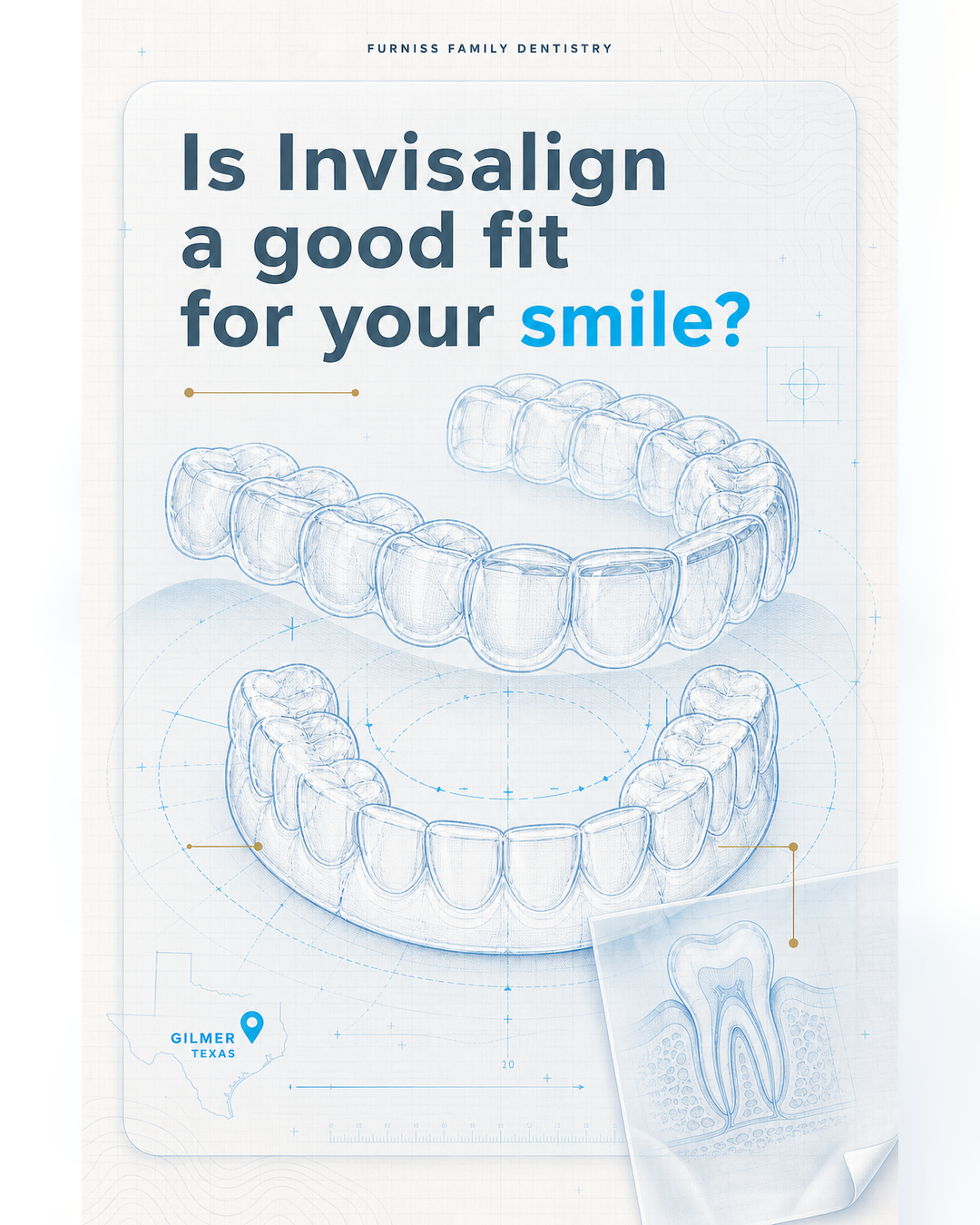
Invisalign can be a strong option for East Texas patients who want straighter teeth without brackets and wires, but it is still real orthodontic treatment. The best result starts with a proper exam, healthy gums, a realistic plan, and a patient who can wear the aligners consistently. Furniss Family Dentistry offers Invisalign consultations in Gilmer, TX for patients from Gilmer, Longview, Pittsburg, Big Sandy, Ore City, and nearby Upshur County communities.
This guide is meant to help you walk into a consultation with better questions. It cannot tell you whether Invisalign is right for your teeth without an exam, digital scan, bite evaluation, and conversation about your goals.
The short answer: is Invisalign available in Gilmer, TX?
Yes. Furniss Family Dentistry provides Invisalign clear aligner treatment in Gilmer. That matters for local patients because clear aligners are not a one-time product you order and forget. You need a diagnosis, a treatment plan, progress checks, possible refinements, and retainers after treatment to help hold the result.
For many families in East Texas, staying local can make the process easier. Follow-up visits, quick questions, retainer checks, and mid-treatment adjustments are simpler when the office is close enough to fit into a normal school, work, or family day.
What Invisalign actually does
Invisalign uses a series of clear plastic aligners that apply controlled pressure to guide teeth gradually. Each tray is slightly different from the last. The goal is not just to make the front teeth look straighter in a photo; the plan also has to account for how the upper and lower teeth meet, how much space exists, whether teeth need rotation, and whether the gums and bone are healthy enough for movement.
That is why an Invisalign consultation should feel more like treatment planning than a sales appointment. A good provider is looking for both sides of the answer: what Invisalign can improve and what it should not be asked to do alone.
Who is often a good candidate for Invisalign?
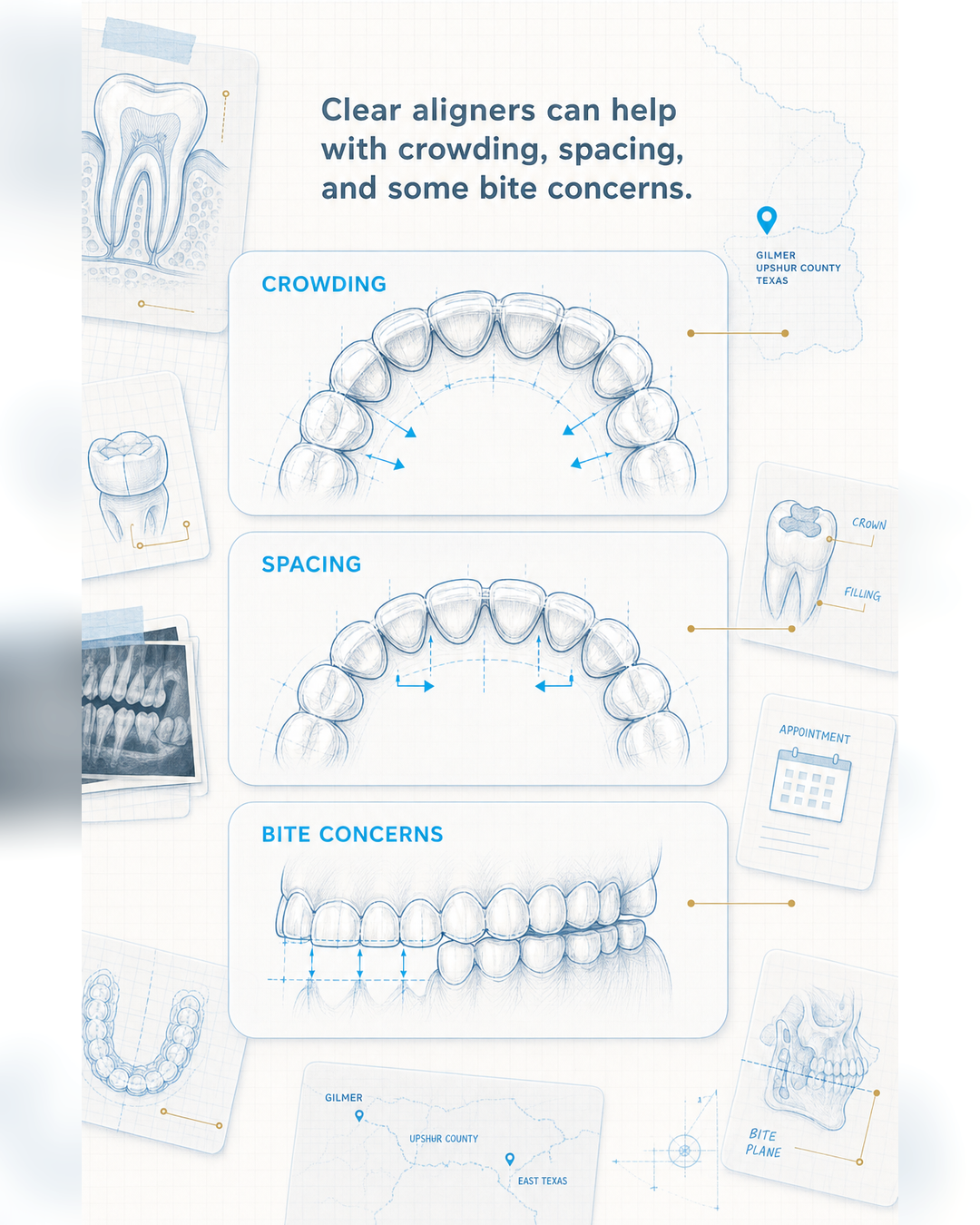
Invisalign may be a good fit for adults and teens with mild to moderate crowding, spacing between teeth, relapse after past orthodontic treatment, or cosmetic alignment goals. It can also help some bite concerns, depending on the case.
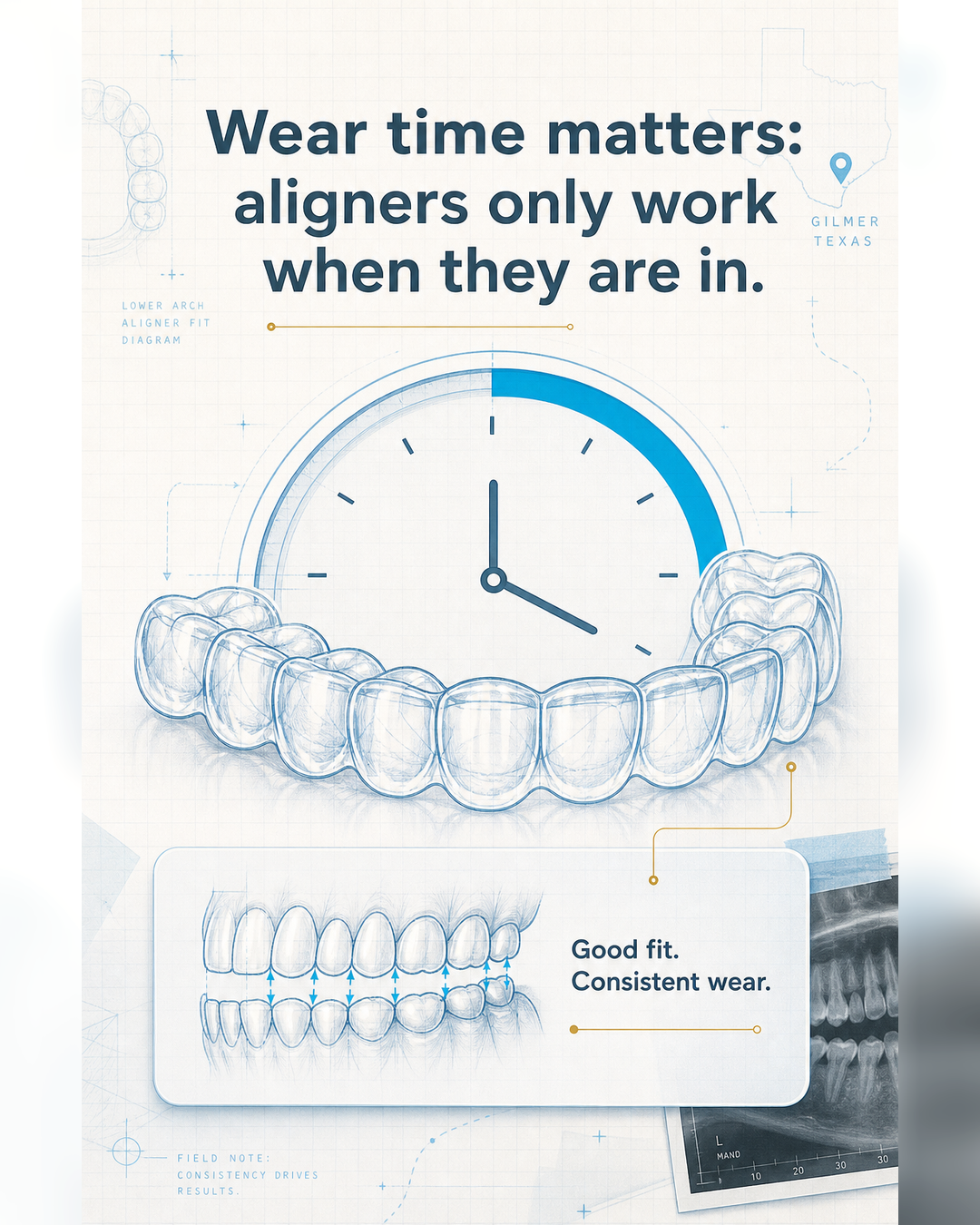
A stronger candidate usually has healthy gums, stable dental work, and enough consistency to wear aligners as directed. The aligners only work while they are in your mouth. If they are left out for long stretches during the day, teeth may not track with the plan, treatment can take longer, and refinements may be needed.
It is also important to be honest about lifestyle. Clear aligners are convenient because you can remove them for meals and brushing, but that convenience comes with responsibility. If you snack all day, sip coffee slowly for hours, misplace things often, or know you will forget trays on busy days, that should be part of the consultation instead of something you hide.
When Invisalign may not be the best first move
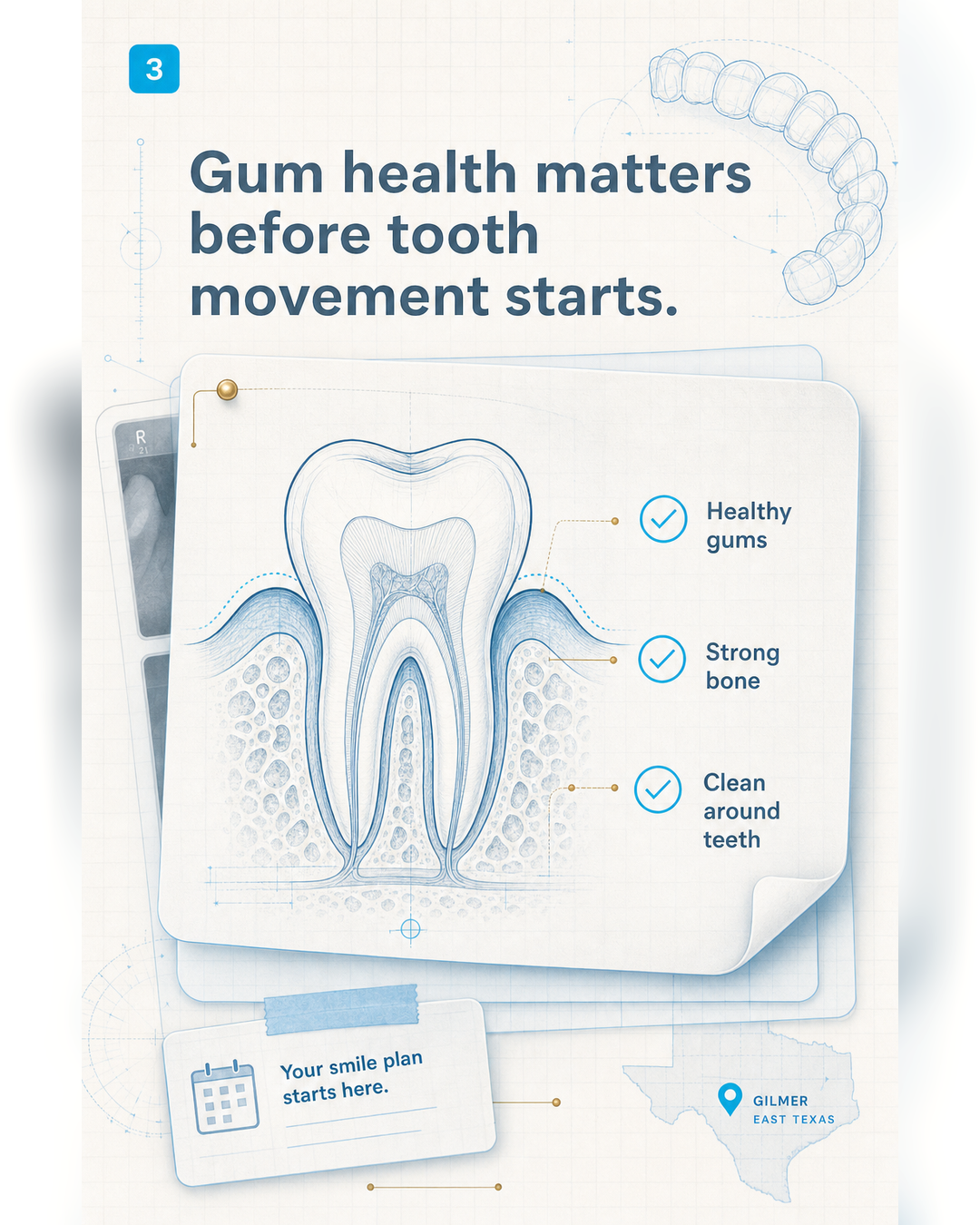
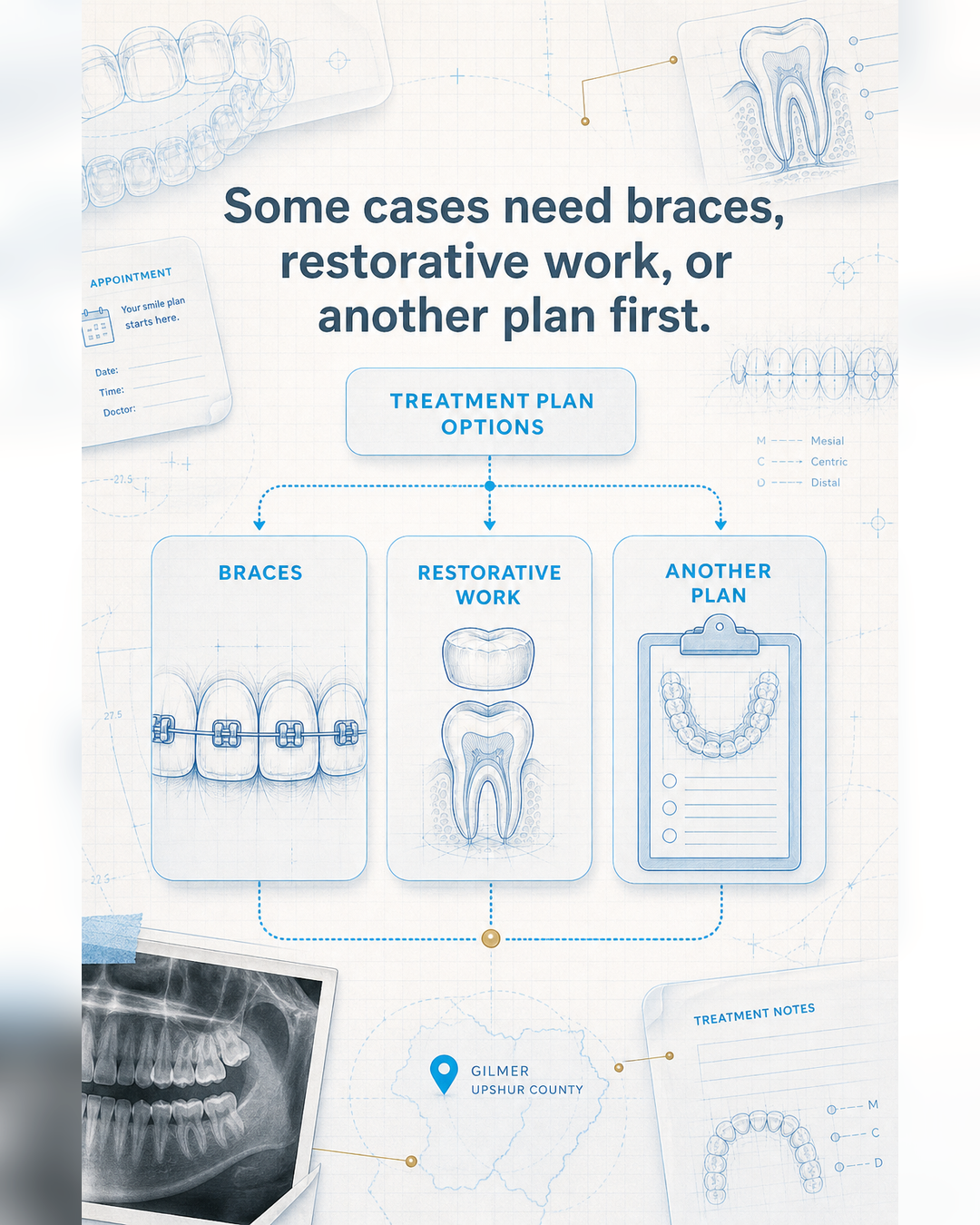
Some patients need a different starting point. Active gum disease, untreated cavities, unstable restorations, or significant bite problems can change the plan. In some cases, traditional orthodontics or specialist care may be more appropriate. In others, Invisalign may still be possible after the mouth is healthier or after restorative work is complete.
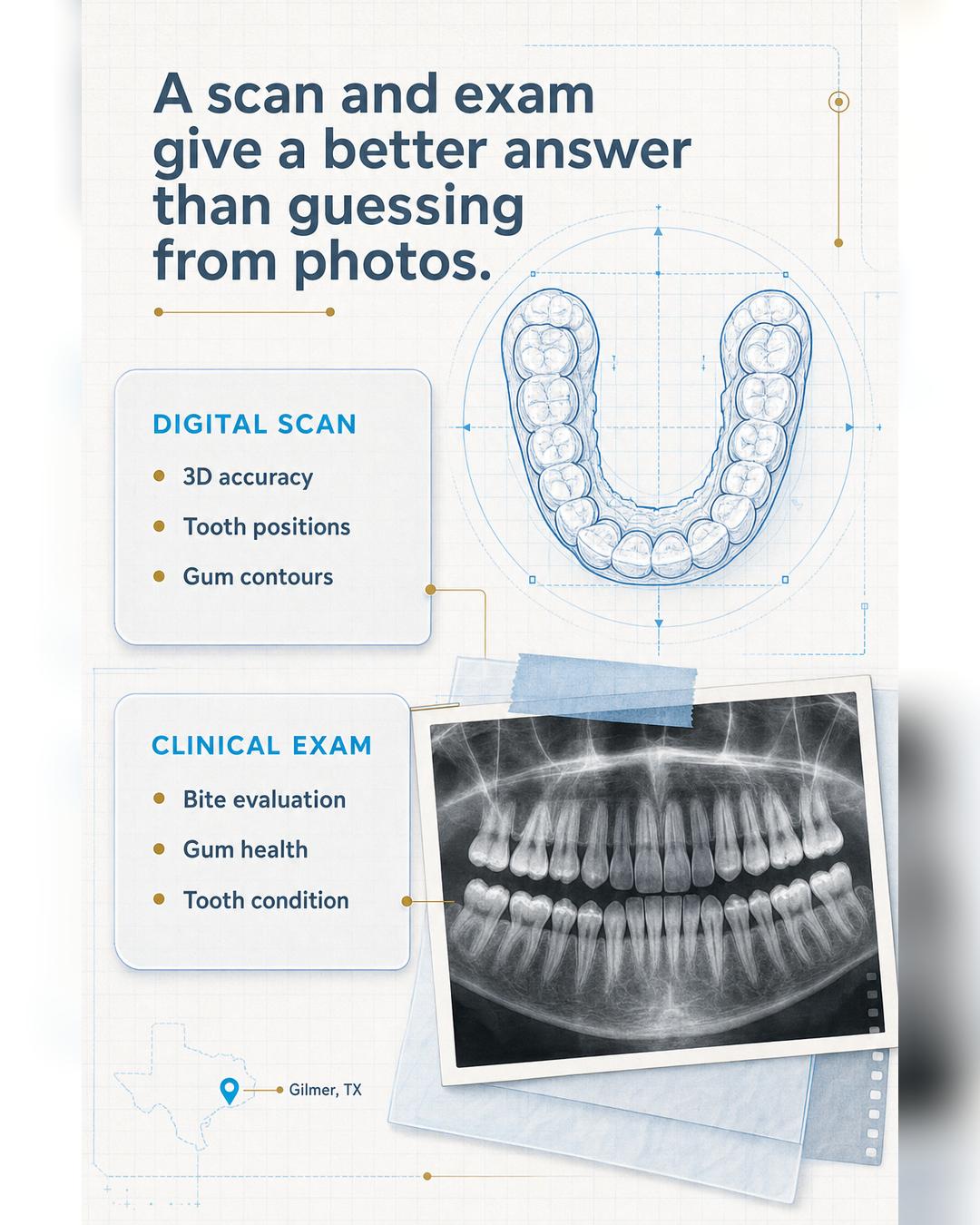
This is one of the biggest reasons to start with a dental exam rather than an online quiz. A photo of your smile does not show gum health, bone support, cavities between teeth, jaw relationship, or whether a crown, bridge, implant, or missing tooth changes the mechanics of movement.
A good Invisalign answer is not always yes. Sometimes the right answer is, “Yes, but first we need to treat this gum issue,” or “Yes, but the goal should be limited,” or “No, this case needs a different kind of orthodontic plan.”
How to prepare for an Invisalign consultation in Gilmer
Bring your goals, relevant dental history, practical scheduling limits, and questions about the full care plan. You do not need to decide that Invisalign is right for you before booking a conversation. The purpose of the consultation is to find out what needs evaluating and what your options involve.
Furniss Family Dentistry is at 1000 Titus St, Gilmer, TX 75644. If you are coming from Longview or another East Texas community, call 903-843-1010 to confirm appointment arrangements and ask which records the office wants before you travel. This is a Gilmer office, not a Longview location.
Before the visit: make a short personal brief
- Your goal: Write down the change you hope to make and anything about your bite that bothers you. Separate appearance preferences from eating, cleaning, or comfort concerns so the clinician can address each one.
- Your dental history: Note previous braces or aligners, retainers, crowns, bridges, implants, missing teeth, and any dental treatment already planned. Ask whether records from another office would be helpful; do not arrange new imaging on your own just for the consultation.
- Your routine: Think through work shifts, school, meals away from home, travel, and caring for removable trays. Bring those constraints to the discussion instead of assuming an advertised treatment timeline will fit your life.
- Your budget questions: If you plan to use dental benefits, have your plan information available and ask who will verify orthodontic benefits. An estimate is not a promise of coverage or an approved financing arrangement.
During the visit: connect each answer to your own plan
Ask what the exam and records show, which goals are realistic, and whether any dental care or specialist evaluation should come first. If you see a digital smile preview, ask which parts are a planning illustration and which findings support the recommendation. A preview is not a guarantee of the final result.
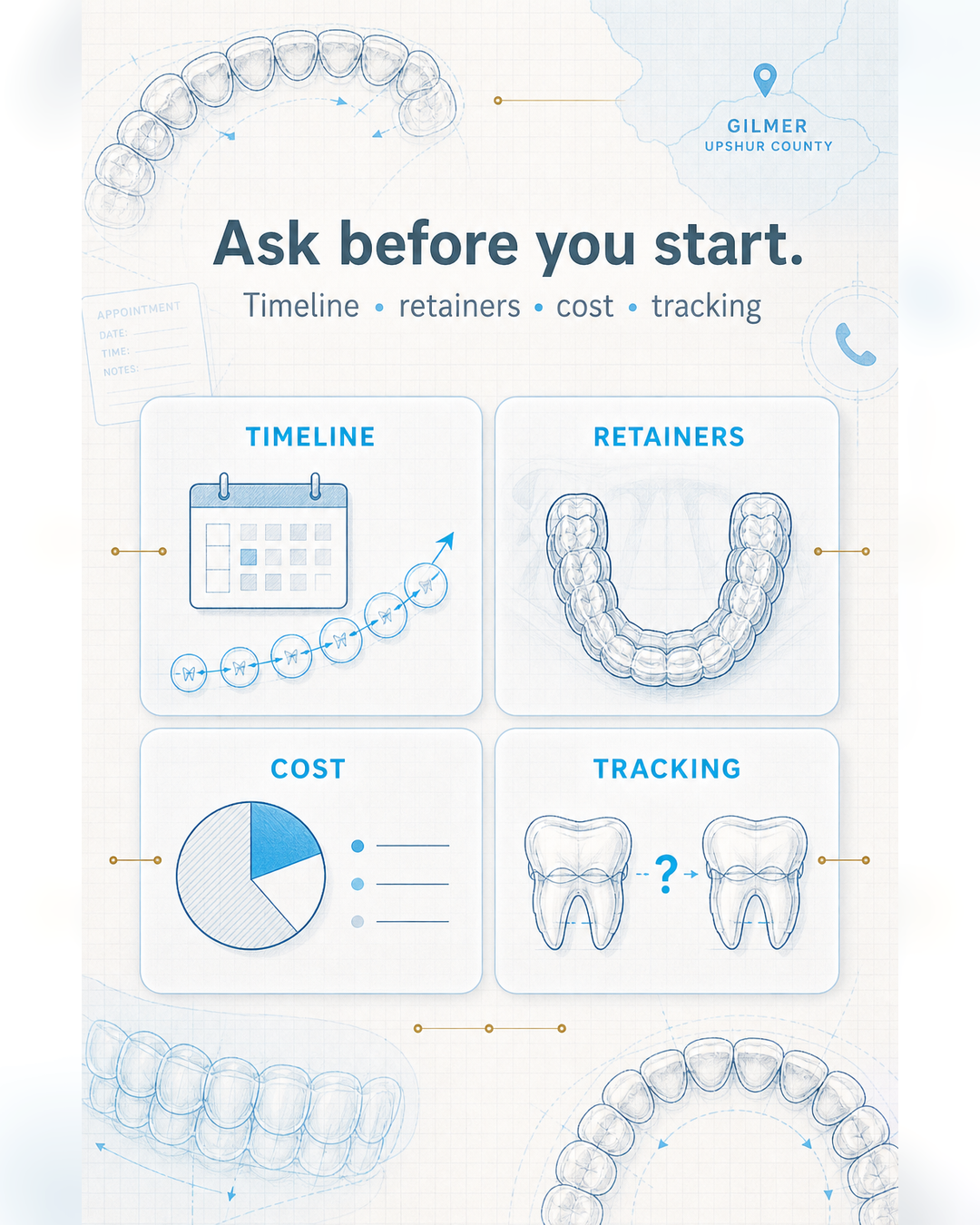
Then ask the provider to distinguish these three parts of the timeline:
- Before aligners: What needs to happen before treatment can begin?
- Active treatment: What does the initial estimate cover, how will progress be checked, and what might change that estimate?
- After the initial series: How would additional aligners, if needed, affect appointments and fees, and what is the plan for retainers?
For a patient traveling from Longview, the useful question is not only how long the first drive takes. Ask which visits need to be in person, how much notice scheduling usually requires, and whom to contact about a lost or poorly fitting tray. Do not assume remote monitoring, a fixed visit interval, or same-day availability.
For the separate decision of which clinician to choose, use our East Texas Invisalign provider guide. For the appliance decision, see our adult Invisalign and braces comparison. This preparation checklist helps you bring useful information to either conversation.
What is daily life with Invisalign like?
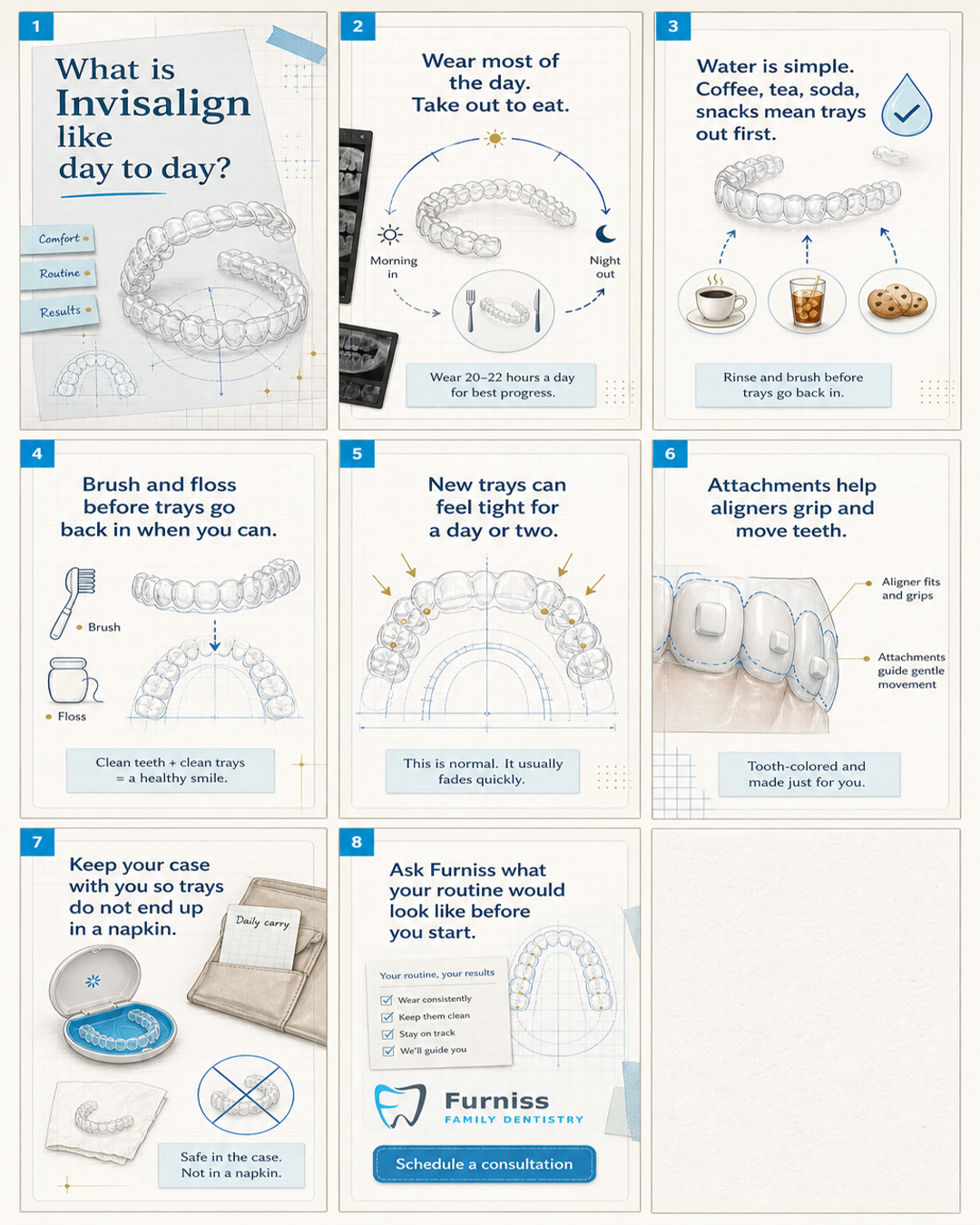
Most patients choose clear aligners because they are easier to live with than braces, but they are not maintenance-free. You generally remove aligners to eat and drink anything other than water, brush and floss before putting trays back in, clean the aligners, and keep them in their case when they are not in your mouth.
New trays can feel tight for the first day or two. Attachments may make the aligners grip more firmly. Speech can feel different briefly. Some patients need to plan around school lunches, shift work, travel, sports, instruments, or long days away from home.
That day-to-day routine matters. A patient who wears trays consistently, keeps them clean, and calls when something feels off usually has a smoother experience than someone who treats aligners like an occasional cosmetic accessory.
How long does Invisalign take?
Treatment time depends on the starting position of the teeth, the bite, the number of movements needed, and how well the teeth track. Some simple cosmetic movement may take several months. More involved cases can take longer. The estimate should come after an exam and scan, not from a generic timeline online.
Refinements are also common enough to discuss upfront. A refinement is an additional set of aligners used when the first planned series does not fully finish the intended movement. That does not automatically mean something went wrong; teeth are biological, and they do not always move exactly like software predicted. What matters is whether the provider is monitoring progress and has a plan for what happens next.
What affects Invisalign cost in East Texas?
Invisalign cost can depend on case complexity, number of aligners, treatment length, insurance benefits, retainers, refinements, and whether other dental work is needed before starting. Furniss Family Dentistry’s Invisalign service page lists treatment at $5,500 and notes that this includes one set of retainers at the end of treatment plus complimentary tooth whitening. Because fees, insurance benefits, and included services can change, patients should confirm the current details during the consultation.
The more important point is transparency. Patients should know what is included, what is not included, whether retainers are part of the plan, how insurance is estimated, and what payment options exist before treatment starts.
Why choose a local Invisalign provider near Gilmer?
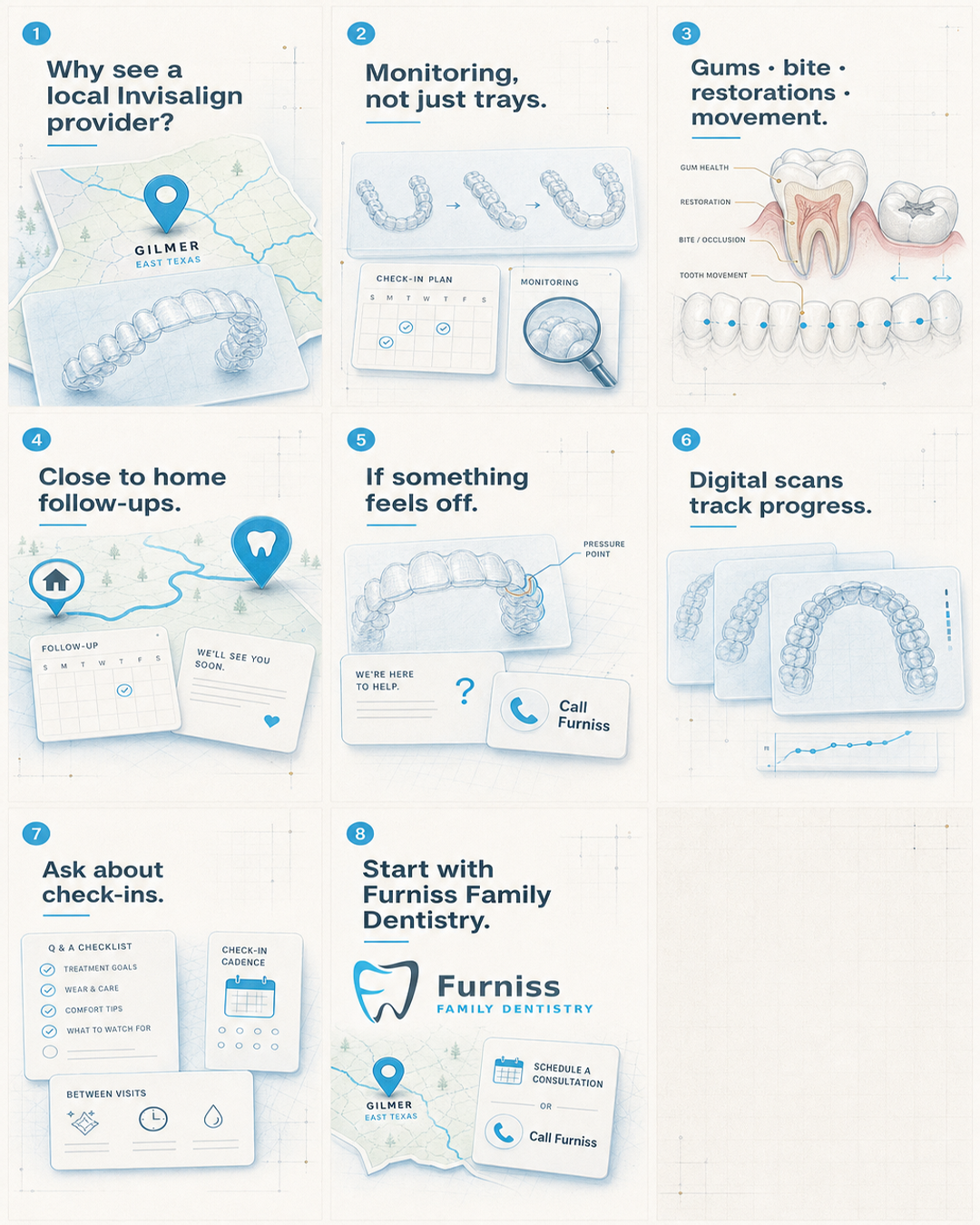
For patients in Gilmer, Longview, Pittsburg, Big Sandy, Ore City, Gladewater, Marshall, and the rest of East Texas, local care can reduce friction. You may need short check-ins, retainer help, a lost tray conversation, or a progress check that does not justify a long drive.
Local care also makes it easier to coordinate Invisalign with routine dental needs. Cleanings, cavity treatment, gum concerns, whitening questions, and retainers all connect to the same mouth. Having a provider who can see the full dental picture is different from treating clear aligners as a mail-order cosmetic product.
Invisalign vs. braces: which is better?
Neither option is automatically better. Invisalign is often appealing for patients who want removable trays, easier brushing and flossing, fewer food restrictions, and a less noticeable look. Braces may be better for certain complex movements, severe bite issues, or patients who do not want the responsibility of removable trays.
The right comparison is not “clear vs. metal.” It is “Which treatment can move these teeth safely and predictably for this patient?” That answer belongs in the exam room.
What should you leave the consultation knowing?
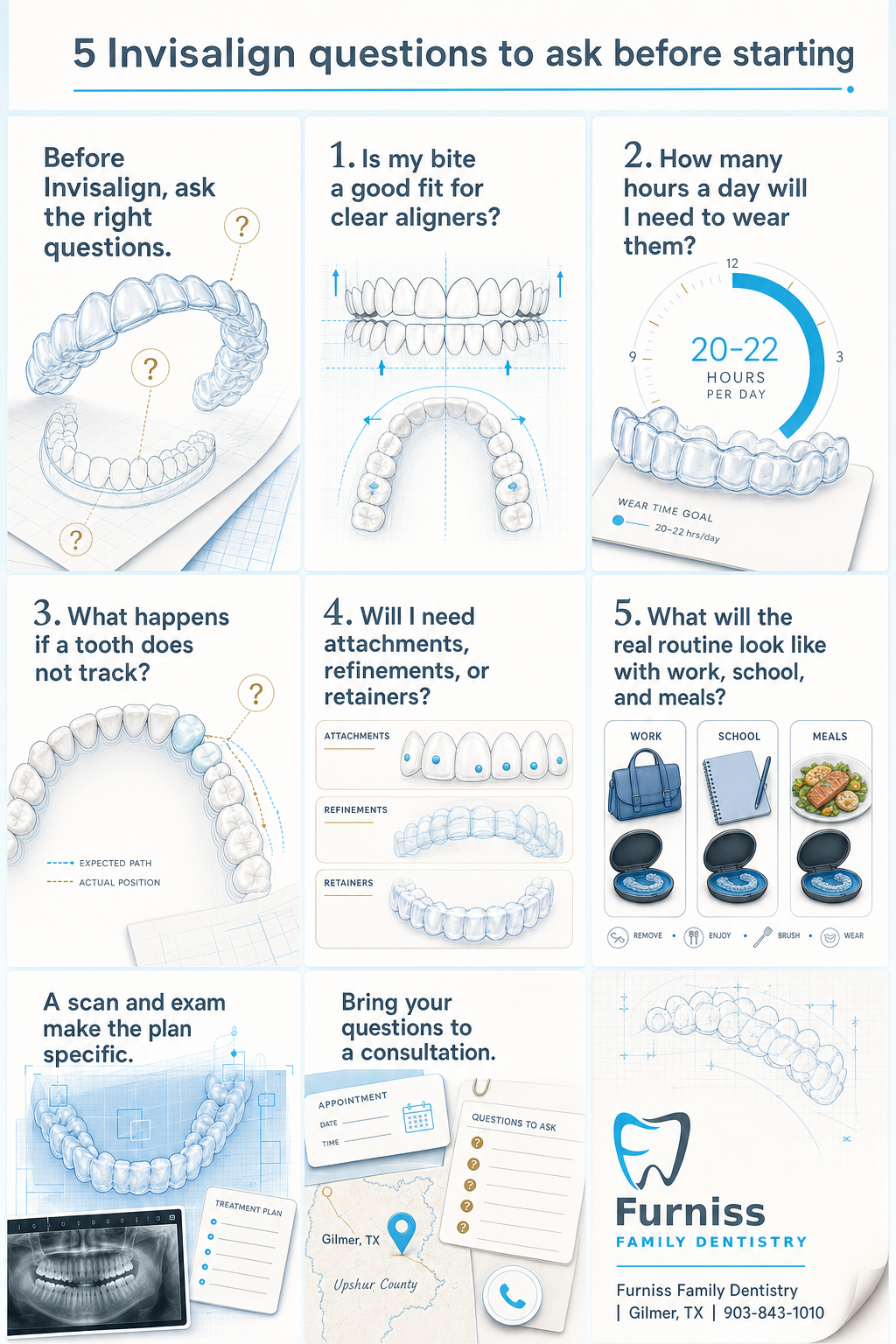
Before agreeing to treatment, ask for a summary you can refer to at home. Use these five headings in your own notes:
- Recommendation and alternatives: What is recommended for my teeth and bite, why, and what other options should I consider?
- Timeline and checkpoints: What is estimated, what depends on my response to treatment, and when will the plan be reassessed?
- Fee and exclusions: Which records, visits, additional aligners, retainers, and replacement items are included or charged separately? Keep the treatment fee, estimated benefits, and financing terms distinct.
- My responsibilities: What wear and care instructions apply to me, and how should I contact the office if something does not fit or I cannot follow the plan?
- Next step: What needs clarifying or completing before I make a decision? Who should I contact with the remaining questions?
An unanswered question is a reason to ask for clarification, not to fill in the blank from a general online price or timeline. Confirm Furniss-specific appointment details and current terms directly with the office. For practice information, visit the Invisalign service page.
Ready to ask about Invisalign in Gilmer?
If you are considering Invisalign or clear aligners in East Texas, schedule a consultation with Furniss Family Dentistry in Gilmer. The goal is not to push every patient into aligners. The goal is to find out whether Invisalign is a smart fit for your teeth, your bite, your health, your budget, and your daily routine.
Call Furniss Family Dentistry at 903-843-1010 to ask about an Invisalign consultation in Gilmer, TX.
Explore Invisalign treatment in Gilmer