Broken or Cracked Tooth in Gilmer, TX: What to Do and When It’s an Emergency
Broken or cracked a tooth near Gilmer? Learn what to do now, when it is an emergency, and when a same-day crown may be an option after an exam.
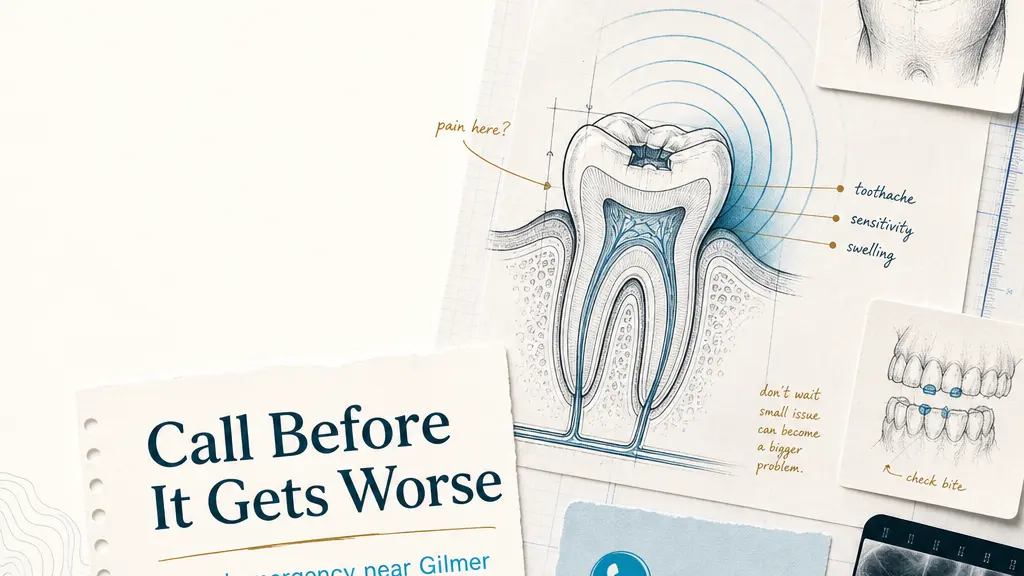
If you break or crack a tooth near Gilmer, rinse your mouth gently with warm water, save any pieces you can find, use a cold compress outside the cheek if there is swelling, avoid chewing on that side, and call a dentist. A damaged tooth may look minor while the crack extends deeper than you can see, so an exam is the only reliable way to tell whether you need smoothing, bonding, a crown, root canal treatment, or another repair.
Call sooner if the tooth is painful, loose, bleeding, sharp enough to cut your mouth, or sensitive when you bite. Seek emergency medical care for trouble breathing or swallowing, facial swelling with fever, uncontrolled bleeding, a suspected broken jaw, or major facial trauma.
Is a broken or cracked tooth a dental emergency?
It can be. A small chip with no pain may not require an after-hours visit, but a deep crack, a large broken area, severe pain, swelling, bleeding, or an injury that makes the tooth loose deserves prompt attention.
The difficult part is that the size of the visible chip does not always tell you how serious the damage is. A crack may affect only the enamel, or it may extend into the dentin, pulp, gum line, or root. Some cracks hurt immediately. Others cause a sharp pain only when you bite or release pressure.
Call a dentist promptly if you notice:
- Pain when biting or chewing
- New sensitivity to hot, cold, or sweets
- A rough or sharp edge
- A missing piece of tooth or filling
- Swelling around the tooth or gum
- A tooth that feels loose or out of position
- Bleeding that does not settle with gentle pressure
- A crack after a fall, sports injury, or other trauma
If you are near Gilmer, call Furniss Family Dentistry at 903-843-1010 and describe the tooth, the pain, when it happened, and whether there is swelling or trauma. The team can help you understand the fastest appropriate next step.
What should you do right after breaking a tooth?
1. Rinse gently with warm water
Use warm water to clean the area. Do not scrub the tooth or push on a loose piece. If you can see dirt or food, a gentle rinse is safer than digging with a sharp object.
2. Save any broken pieces
If part of the tooth came out, place it in a clean container and bring it to the dental office. A dentist may not be able to reattach every fragment, but seeing the piece can help explain what broke.
3. Use gentle pressure for bleeding
Place clean gauze over the area and apply light, steady pressure. If bleeding is heavy, will not stop, or follows major facial trauma, seek urgent medical care.
4. Use a cold compress outside the cheek
A cold compress can help with swelling and discomfort. Keep it outside the mouth and use short intervals rather than placing ice directly against the tooth or gum.
5. Protect the tooth until you are seen
Avoid chewing on the damaged side. Choose softer foods and avoid very hot, cold, hard, or sticky foods that trigger pain or pull on the broken area.
6. Call a dentist and explain the symptoms
Tell the office whether the tooth is painful, loose, bleeding, swollen, or sharp; whether the damage followed an injury; and whether you have fever, facial swelling, trouble breathing, or trouble swallowing. Those details help the team decide how quickly you should be evaluated.
What should you avoid doing?
Do not put aspirin directly on the tooth or gum. It can irritate or burn oral tissue. Do not use household glue to reattach a fragment or crown. Do not file the tooth with a tool, push a loose piece back into place, or keep chewing on the damaged side to “test” it.
Most importantly, do not assume that no pain means no problem. Enamel itself does not contain nerves, and some fractures become painful only after they spread or irritate the inner tooth.
Chipped, cracked, or split: what is the difference?
A chipped tooth usually means a piece of enamel has broken away. Small chips may need smoothing or bonding, while larger breaks may need a crown or other restoration.
A cracked tooth has a line that may extend from the chewing surface toward the gum. The crack can be difficult to see and may cause pain that comes and goes when you bite.
A fractured cusp often breaks around an older filling. Depending on how much healthy tooth remains, a crown may help protect the tooth from further damage.
A split tooth has separated into distinct sections. A split or a crack extending deeply into the root may not be repairable in the same way as a surface chip.
You cannot reliably classify a fracture at home. Dentists may use an exam, bite testing, light, dental X-rays, and other diagnostic tools to understand where the crack goes and whether the tooth can be restored.
Can a same-day crown repair a broken or cracked tooth?
Sometimes. A crown covers and protects the tooth, so it may be appropriate when a large part of the tooth is damaged but the remaining structure and root can still support a restoration. Furniss Family Dentistry offers same-day CEREC crowns in Gilmer, which can allow the team to scan, design, and place many crowns in one visit when a crown is the right treatment.
Not every broken tooth is a same-day crown case. A small chip may need only smoothing or bonding. A crack that reaches the pulp may require root canal treatment before the final restoration. A tooth that is split below the gum line or badly damaged at the root may need extraction. The exam comes first because the fastest treatment is only useful when it is also the right treatment.
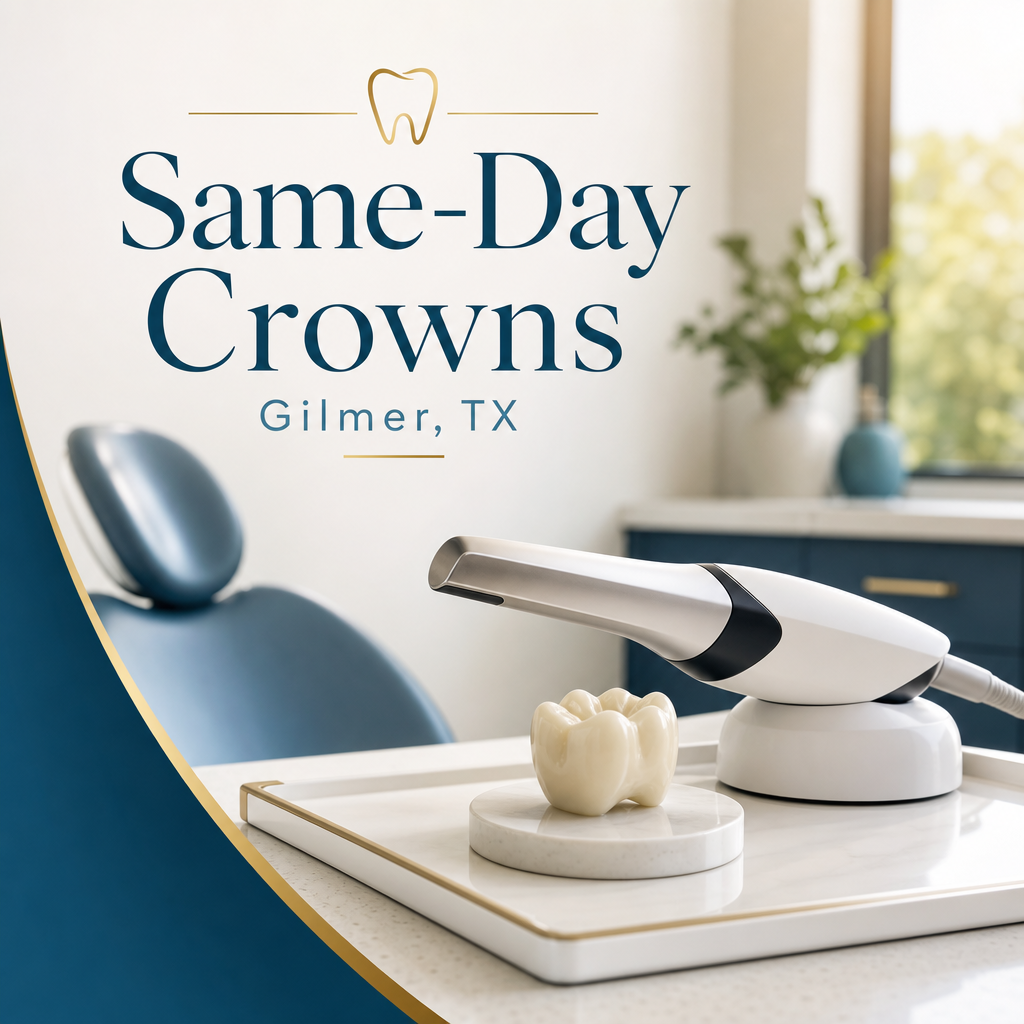
Learn more about same-day dental crowns in Gilmer and emergency dental care at Furniss Family Dentistry.
When should you call a dentist instead of going to the ER?
For most broken teeth, lost fillings, crown problems, and tooth pain without serious medical symptoms, call a dentist first. A dental office can evaluate the tooth and discuss the repair itself.
Go to an emergency room or call emergency services for:
- Trouble breathing or swallowing
- Facial swelling with fever or rapidly spreading swelling
- Uncontrolled bleeding
- A suspected broken jaw
- Major facial trauma
- Loss of consciousness or other signs of a serious head injury
If you are unsure, describe the symptoms when you call. The dental team can help you decide whether you need a dental visit or emergency medical care.
Can a broken tooth wait until tomorrow?
A tiny chip with no pain, bleeding, sharp edge, swelling, or trauma may be able to wait until normal office hours, but you should still call to arrange an exam. Do not wait if pain is severe or worsening, the tooth is loose, a large piece is missing, the inner tooth looks exposed, swelling is developing, or the injury involved significant force.
Waiting several days can allow a crack to spread, a sharp edge to injure your cheek or tongue, or bacteria to reach deeper tooth structure. Prompt evaluation gives the dentist more information and may preserve more treatment options.
Broken or cracked tooth help in Gilmer, TX
If you broke or cracked a tooth in Gilmer, Upshur County, or a nearby East Texas community, call Furniss Family Dentistry at 903-843-1010. The office is located at 1000 Titus Street in Gilmer. Explain what happened and what symptoms you have so the team can help you choose the next step.
This article provides general education and is not a diagnosis. Treatment depends on an in-person dental exam.
Quick questions about broken teeth
Can a cracked tooth heal on its own?
No. Tooth structure does not heal like skin or bone. Treatment may keep the crack from worsening and may save the tooth, depending on where the crack extends.
Should I save a broken piece of tooth?
Yes. Place it in a clean container and bring it with you. Do not scrub it or glue it back in place.
What if the tooth is broken but does not hurt?
Call a dentist anyway. Some cracks affect only the outer tooth at first, while others become painful later. An exam can show whether the tooth needs protection.
Can a dentist fix a broken tooth in one visit?
Sometimes. Minor chips may be smoothed or bonded, and some teeth can receive a same-day crown. Deeper cracks may need multiple steps, specialist care, or a different treatment.
Is pain when biting a sign of a cracked tooth?
It can be. Cracked teeth often cause sharp or intermittent pain when biting or when pressure is released, but other dental problems can cause similar symptoms. A dentist needs to examine the tooth.
Sources
Get emergency dental help in Gilmer