Toothache or Dental Emergency in Gilmer, TX: What to Do Before You See a Dentist
A plain-English guide for Gilmer families dealing with toothache, swelling, broken teeth, or dental injury: what to do first, when to call a dentist, and when symptoms belong in emergency medical care.
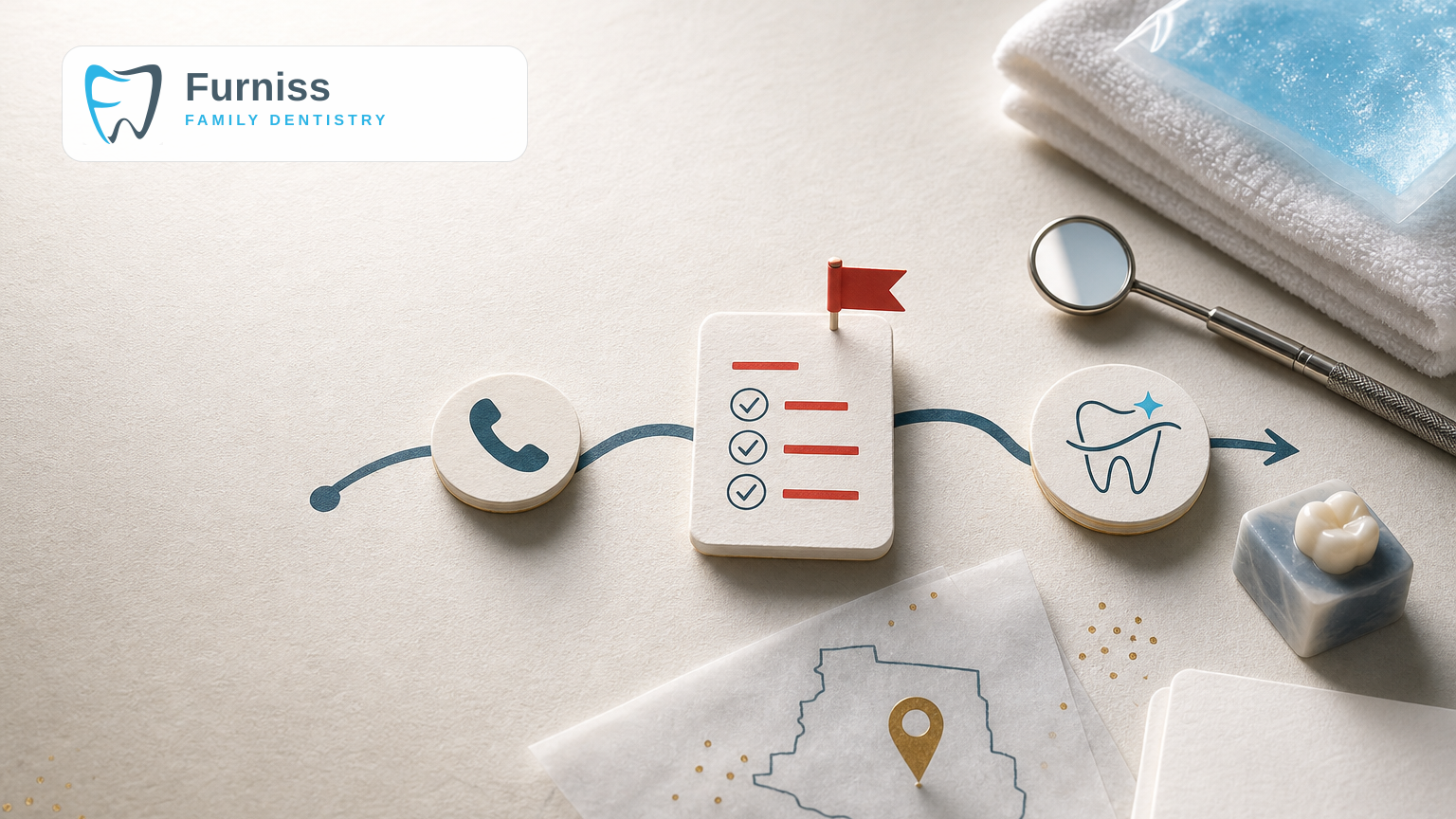
If you have a severe toothache, swelling, a broken tooth, or a knocked-out tooth near Gilmer, the safest first step is to call a dentist and explain what happened. Furniss Family Dentistry helps patients in Gilmer and Upshur County understand whether the problem needs prompt dental care, what to do before an appointment, and when symptoms are serious enough for emergency medical care.
This guide is not a diagnosis and it cannot replace an exam. It is a plain-English starting point for the moment when your mouth hurts, your child chipped a tooth, or you are trying to decide whether waiting will make things worse.
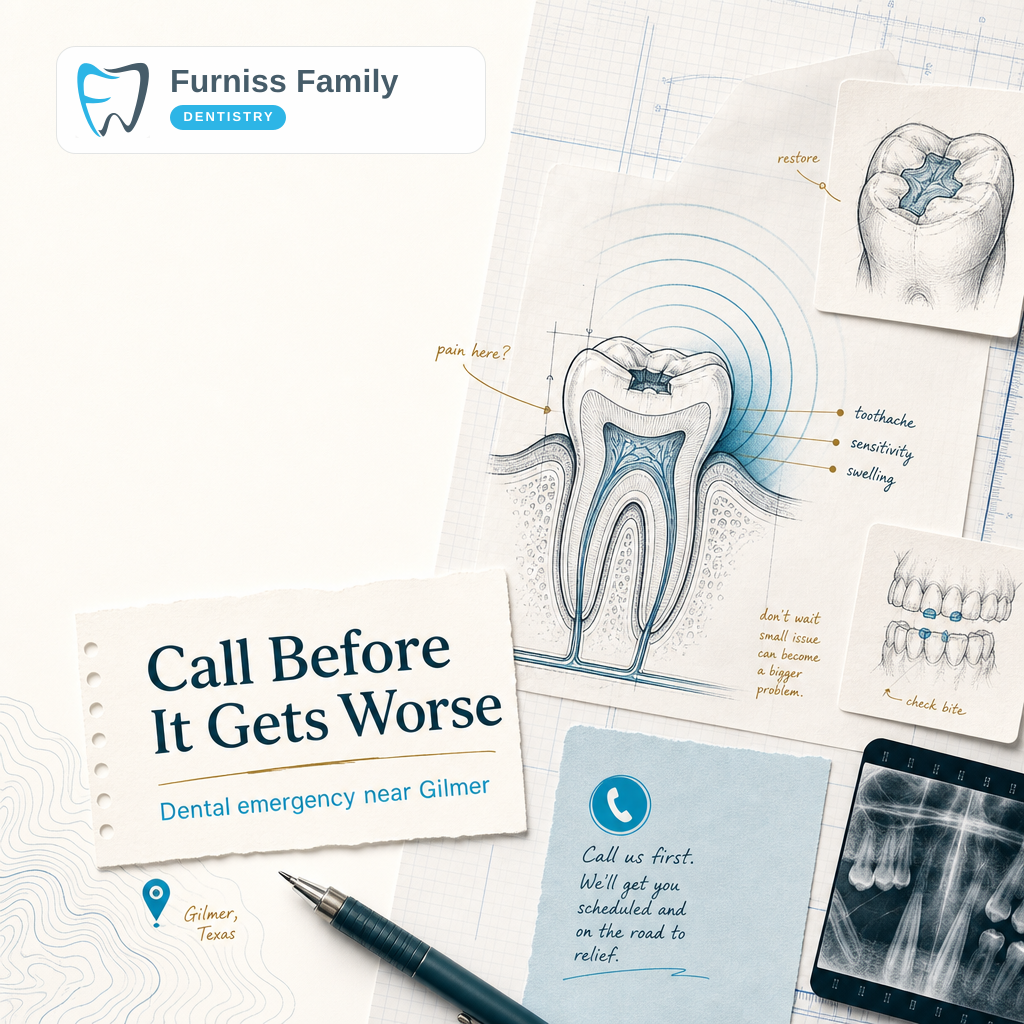
Quick answer: what should I do first?
Call the dental office and describe the symptom clearly: where the pain is, when it started, whether there is swelling, whether a tooth broke, and whether you have fever, trauma, or trouble swallowing. If you are near Gilmer, call Furniss Family Dentistry at 903-843-1010.
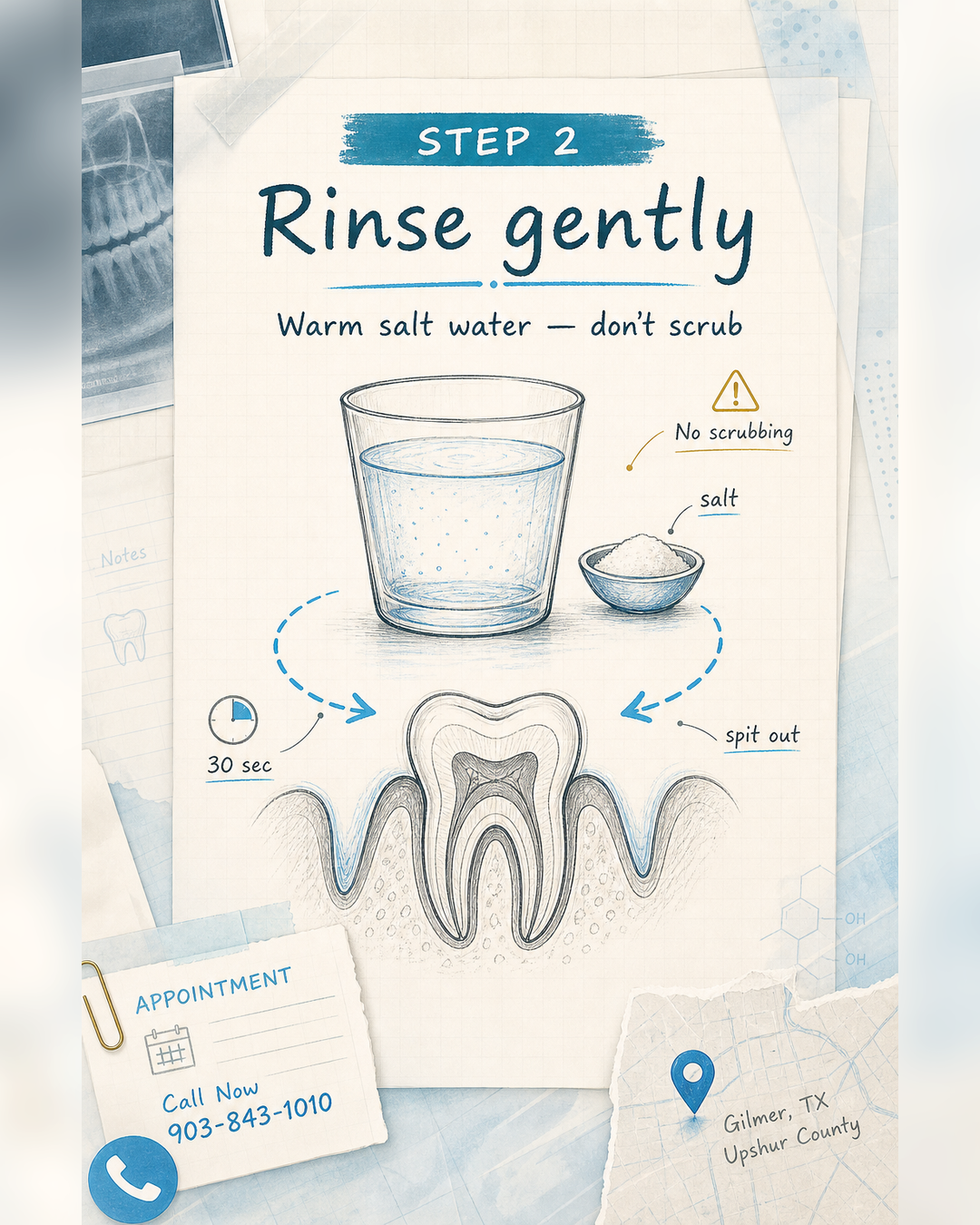
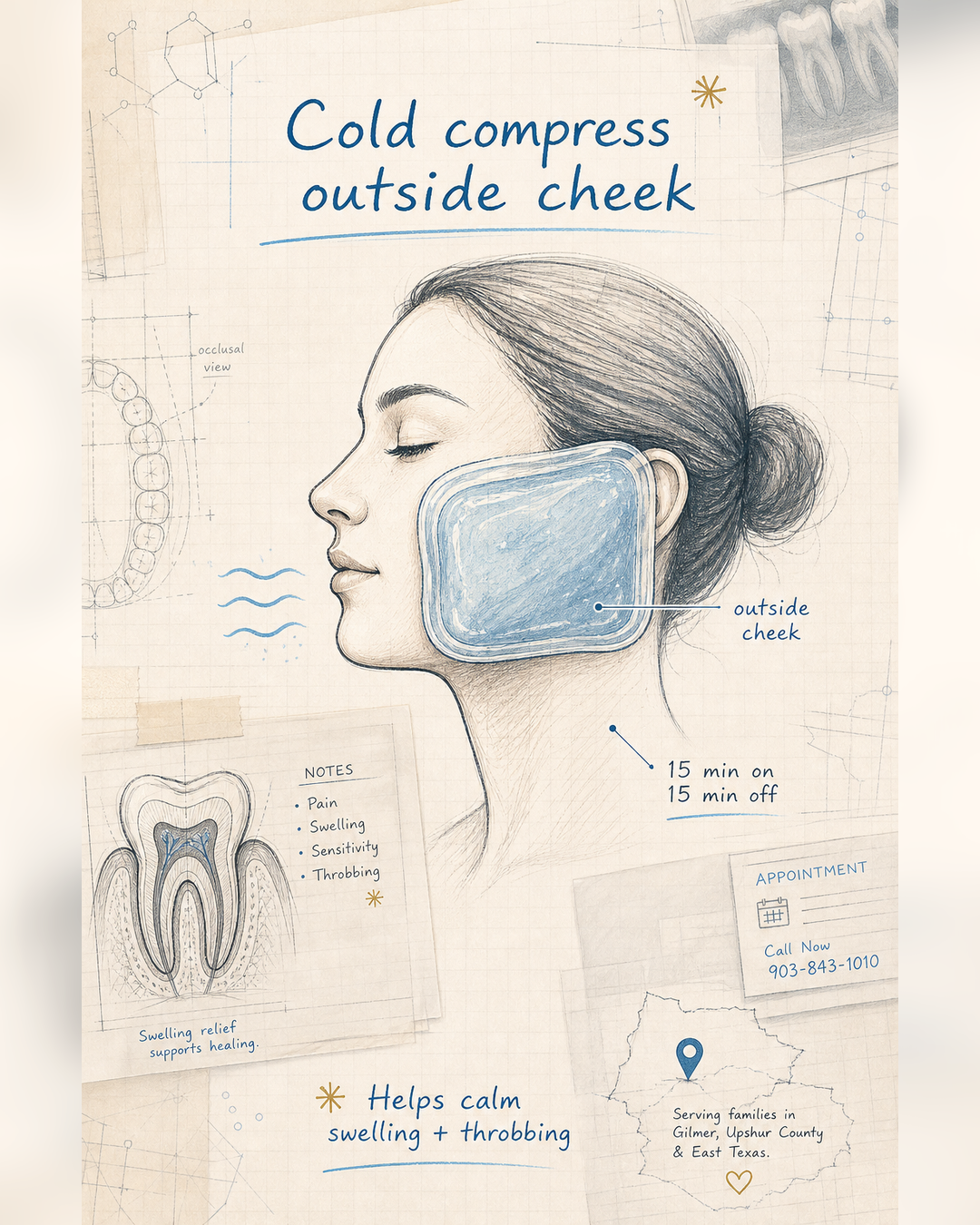
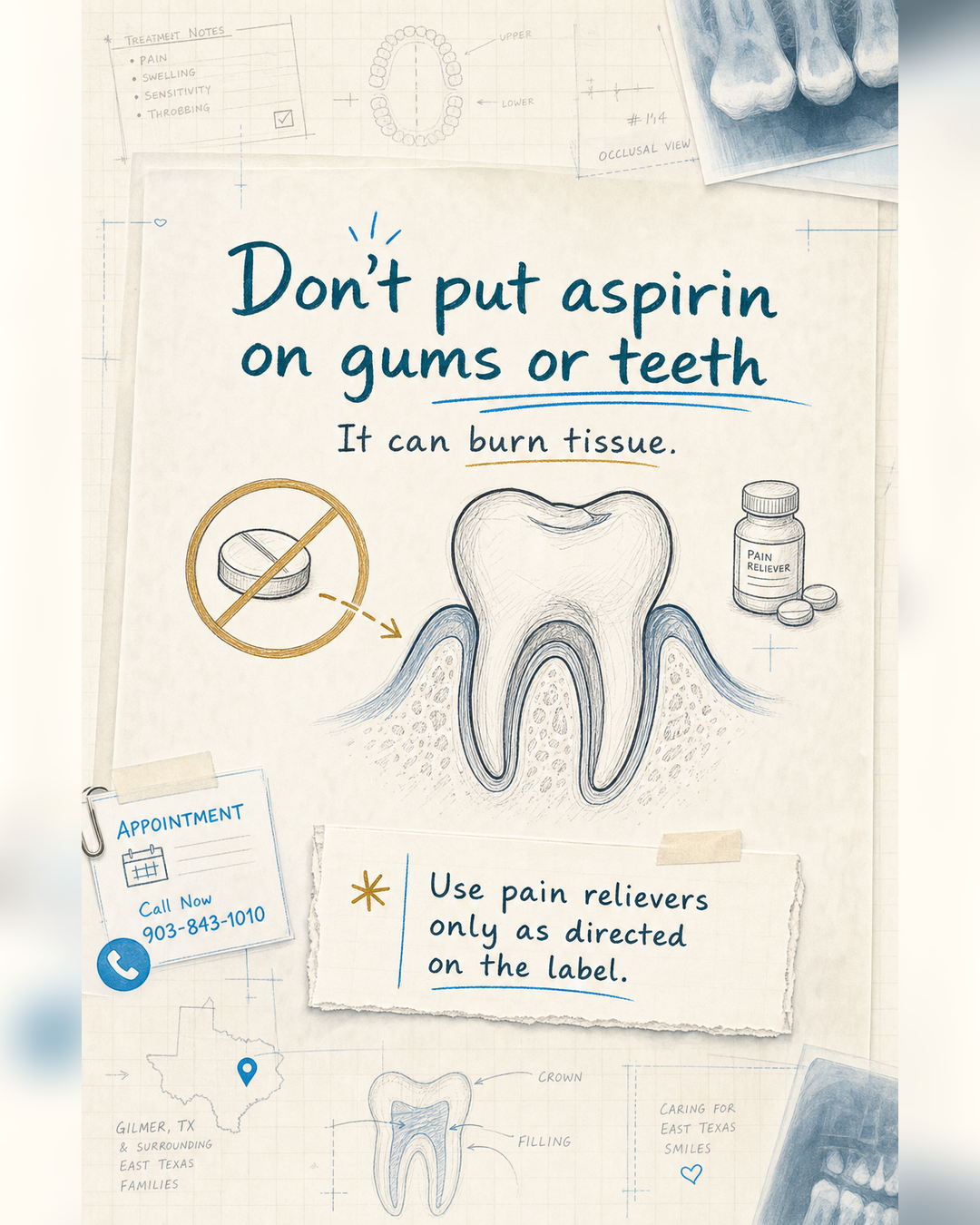
While you are waiting for guidance, keep the area clean, avoid chewing on the painful side, and use simple comfort steps that do not make the problem harder to treat. Warm water rinses, gentle flossing if food is trapped, and a cold compress on the outside of the cheek can help you get through the next step. Do not put aspirin directly on your gums or tooth, and do not use sharp tools to dig around the sore area.
What counts as a dental emergency?
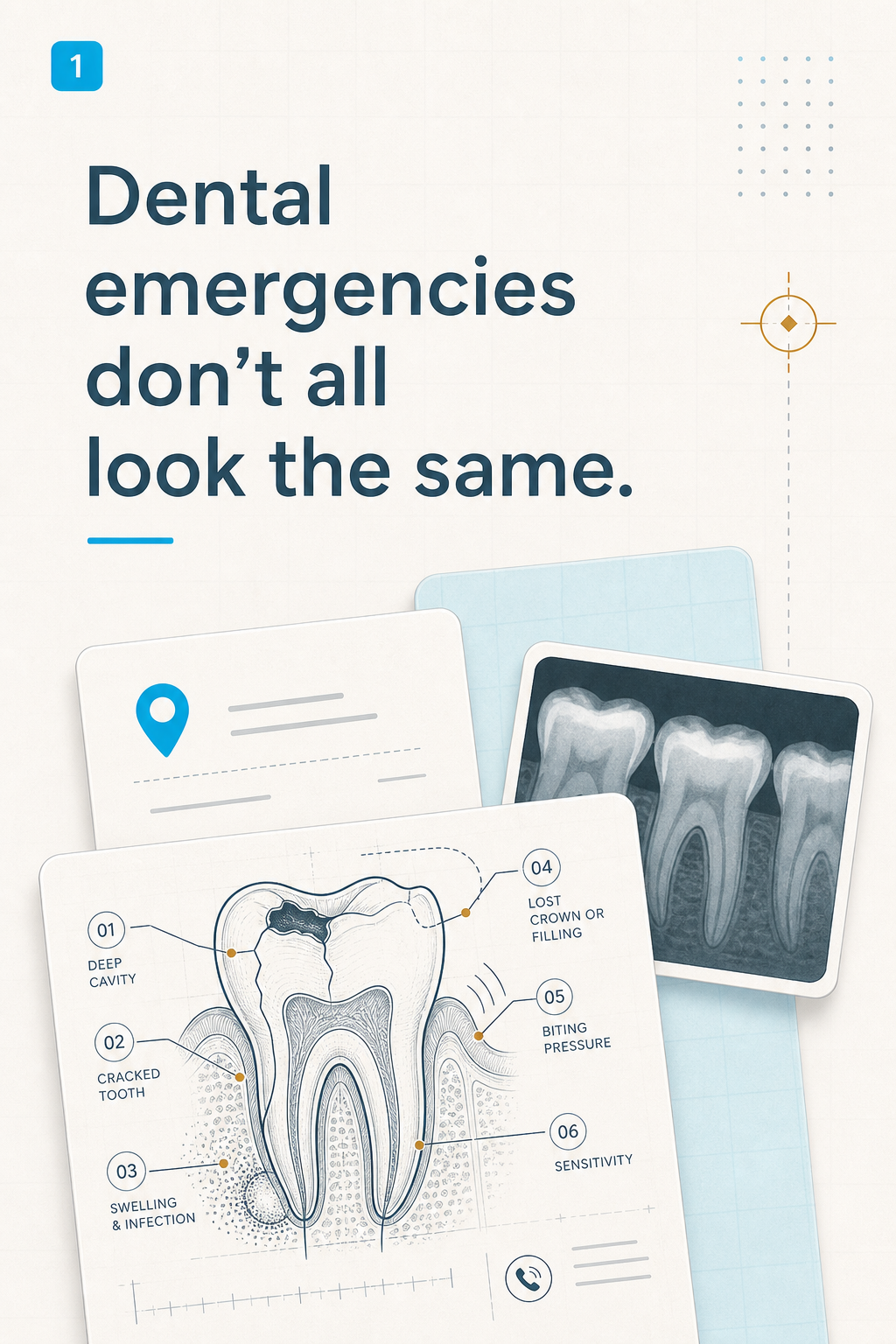
A dental emergency is usually a situation where waiting could make pain, infection, bleeding, or tooth damage worse. Common examples include severe tooth pain, facial or gum swelling, a cracked or broken tooth that hurts, a knocked-out permanent tooth, bleeding that will not stop, or an injury to the mouth or jaw.
Not every dental problem needs the emergency room. Many urgent dental problems are best handled by a dental office because the tooth itself needs to be evaluated. But some symptoms cross the line into medical emergency territory, especially when infection or trauma may affect breathing, swallowing, or the jaw.
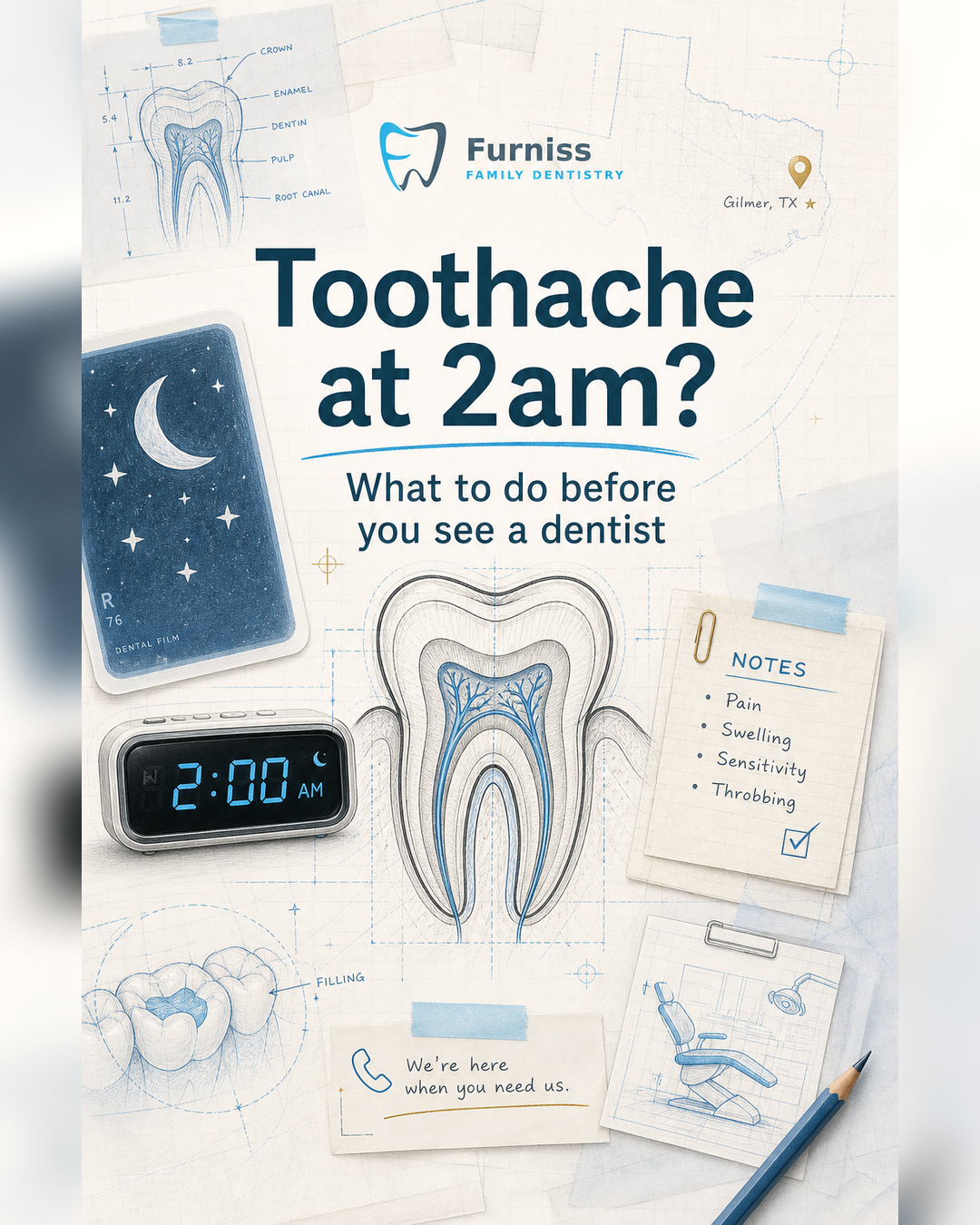
Toothache at 2 a.m.: what can wait until morning?
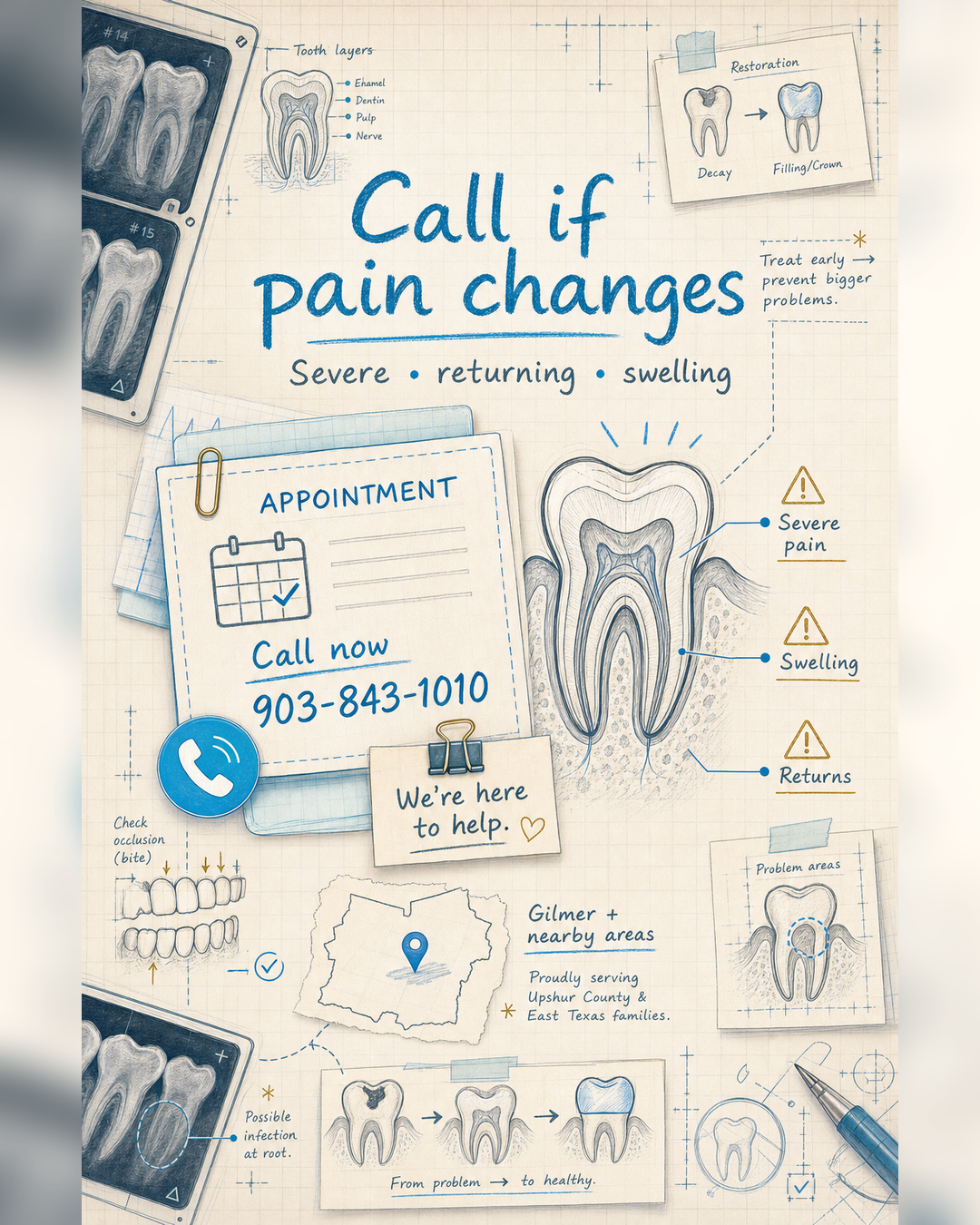
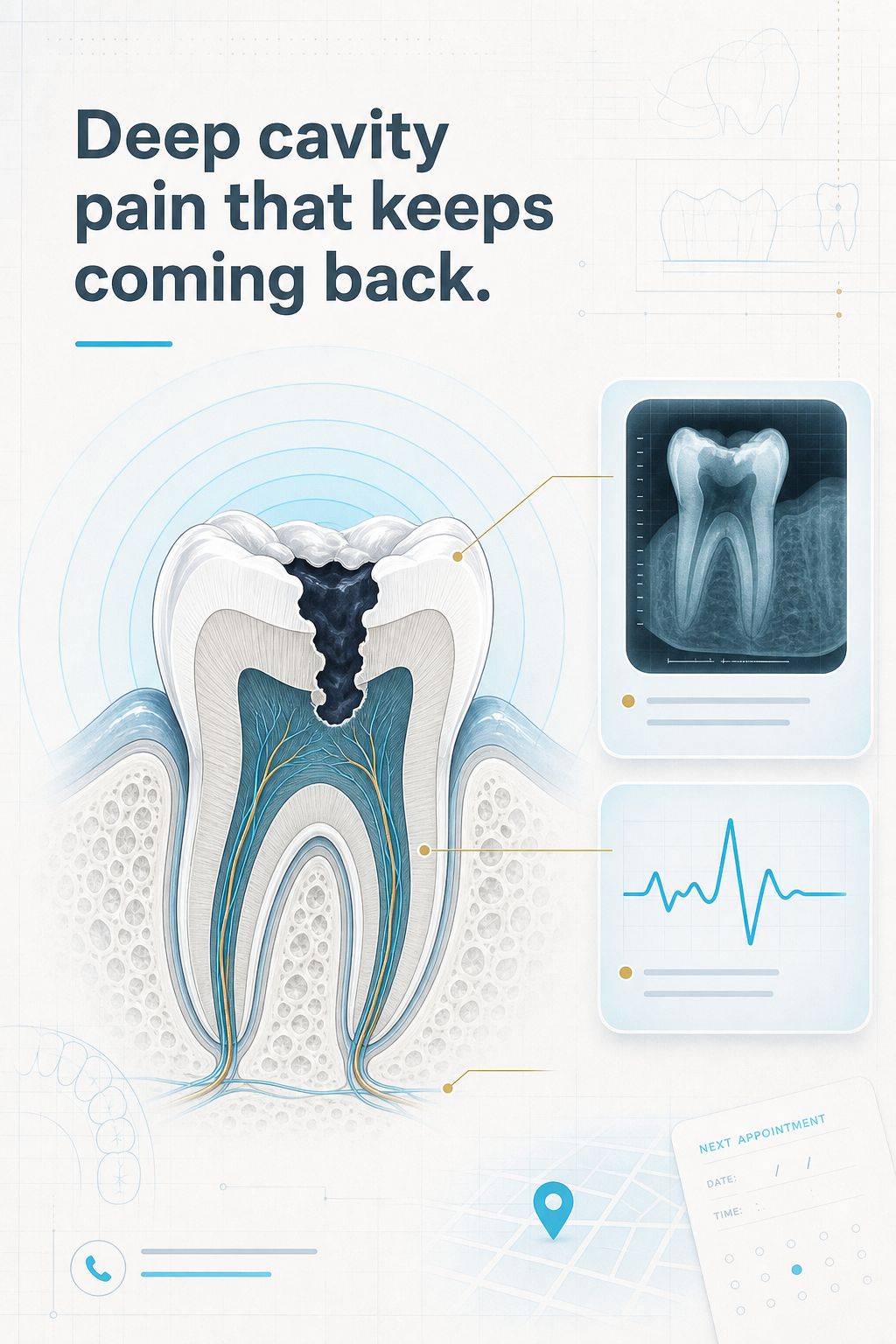
A mild toothache that improves with normal comfort measures may be able to wait until regular office hours. A severe toothache that keeps returning, gets worse, wakes you up, hurts when you bite, or comes with swelling should be taken more seriously.
For a bad toothache before you see a dentist:
- Rinse gently with warm water to clean the area.
- Floss carefully if you think food is trapped between teeth.
- Use a cold compress outside the cheek if there is swelling or throbbing.
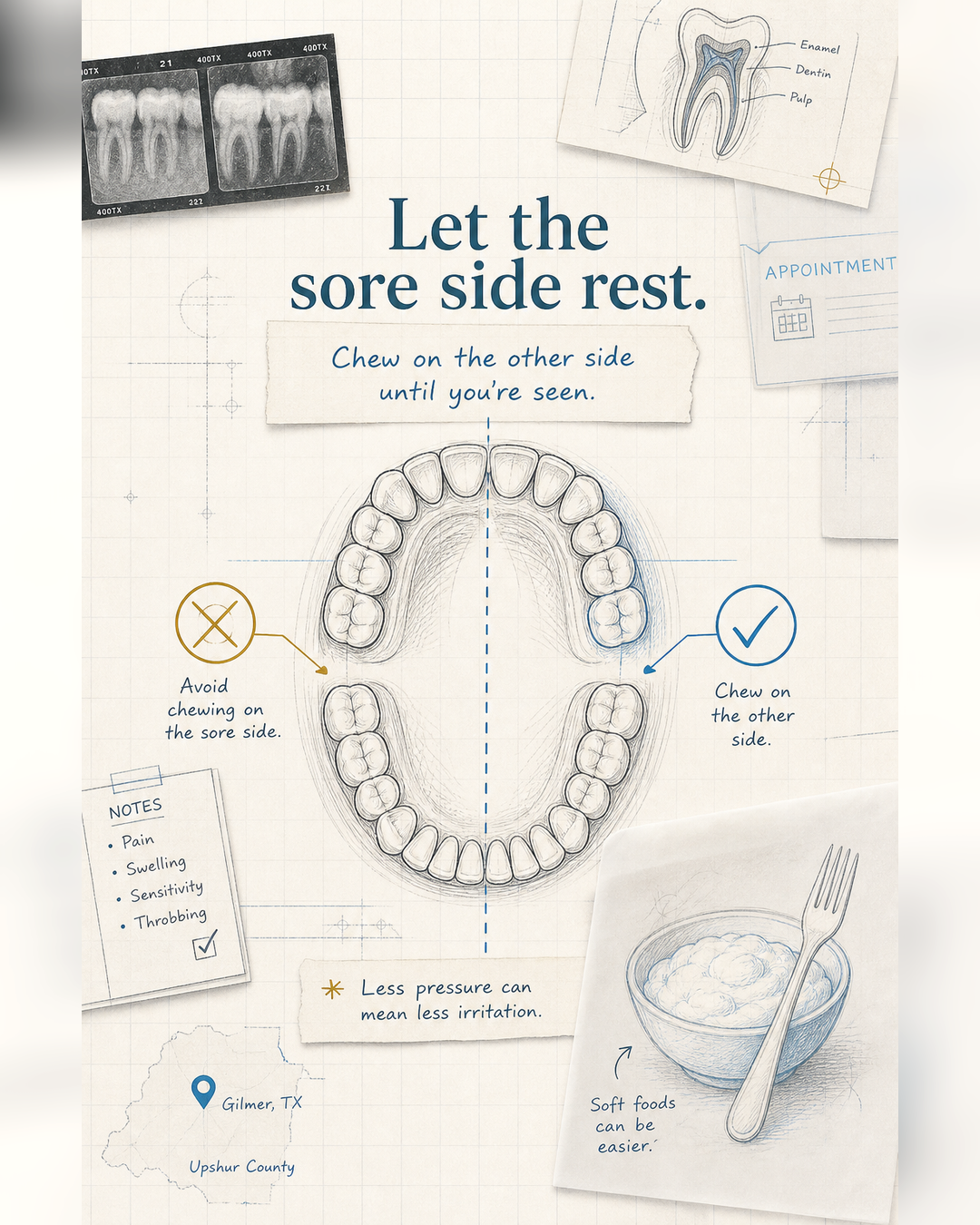
- Avoid chewing on that side.
- Follow label directions for over-the-counter pain medicine you normally tolerate.
- Call a dentist instead of waiting several days to see if it disappears.
A toothache can come from decay, a cracked tooth, gum inflammation, bite trauma, or an abscess. The right treatment depends on the cause, which is why the goal is not to mask the pain forever. The goal is to get enough information to choose the next safe step.
When swelling changes the situation
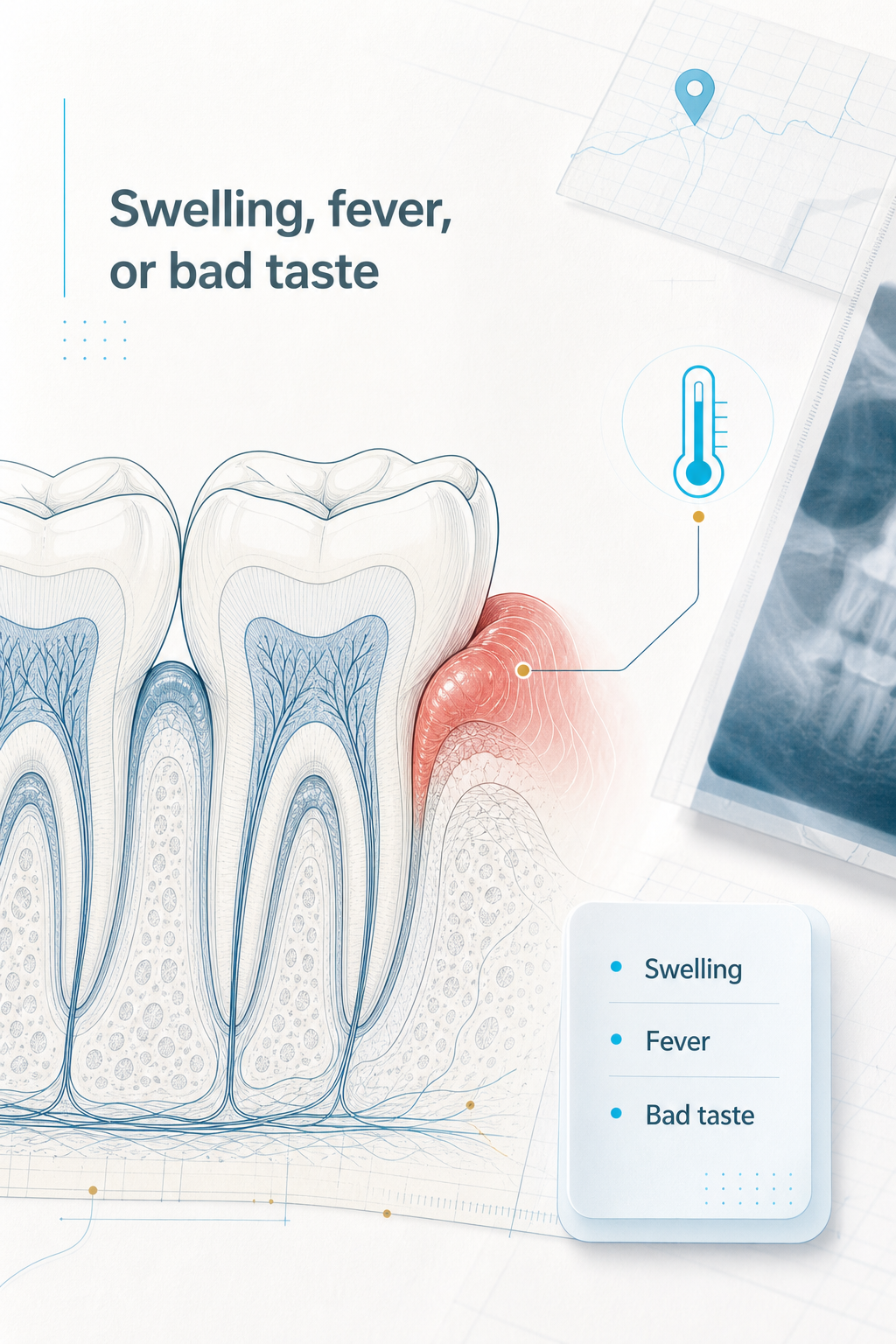
Swelling deserves attention because it can be a sign of infection. Call a dentist promptly if tooth pain comes with gum swelling, a pimple-like bump on the gum, bad taste, fever, or swelling in the face or jaw.
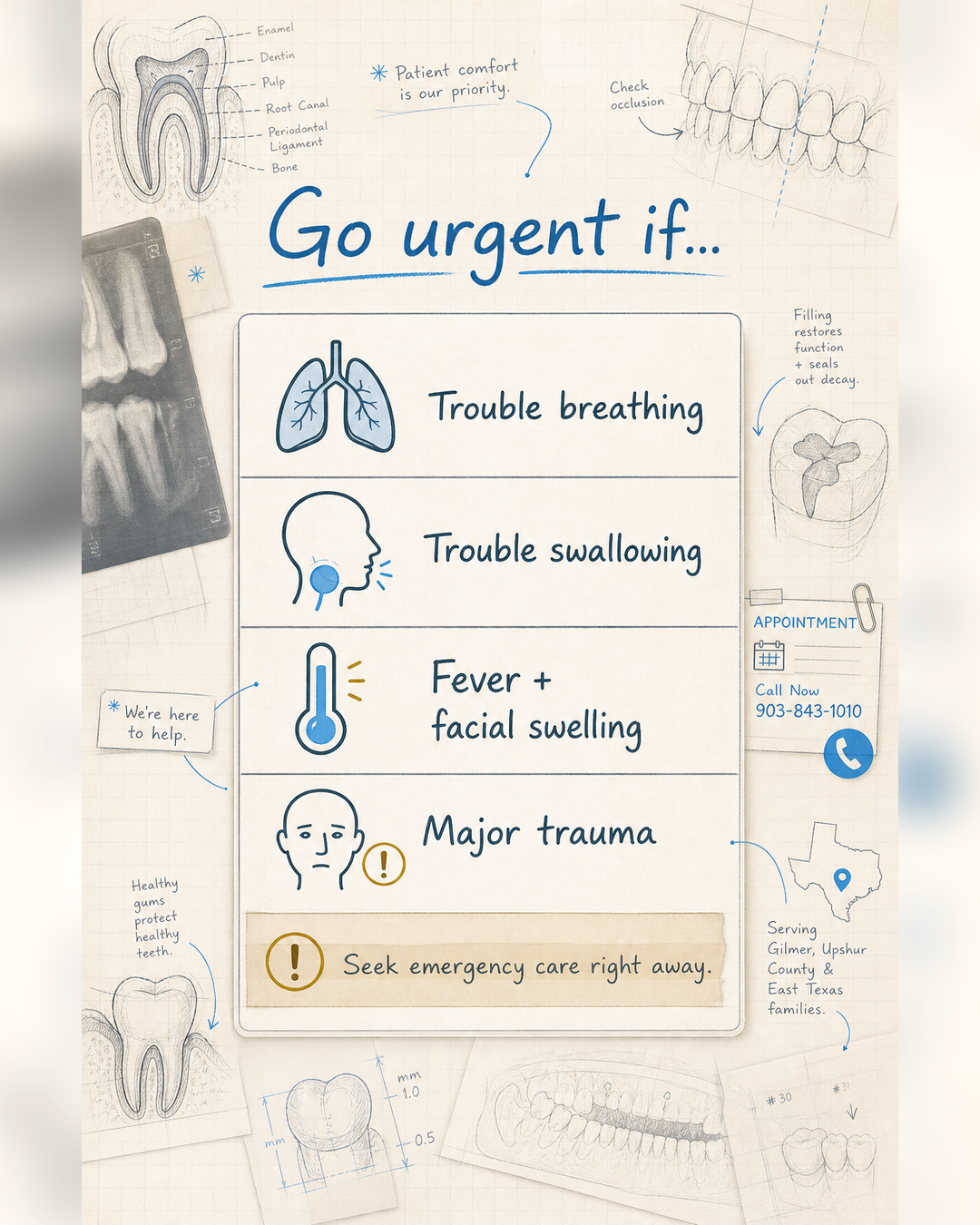
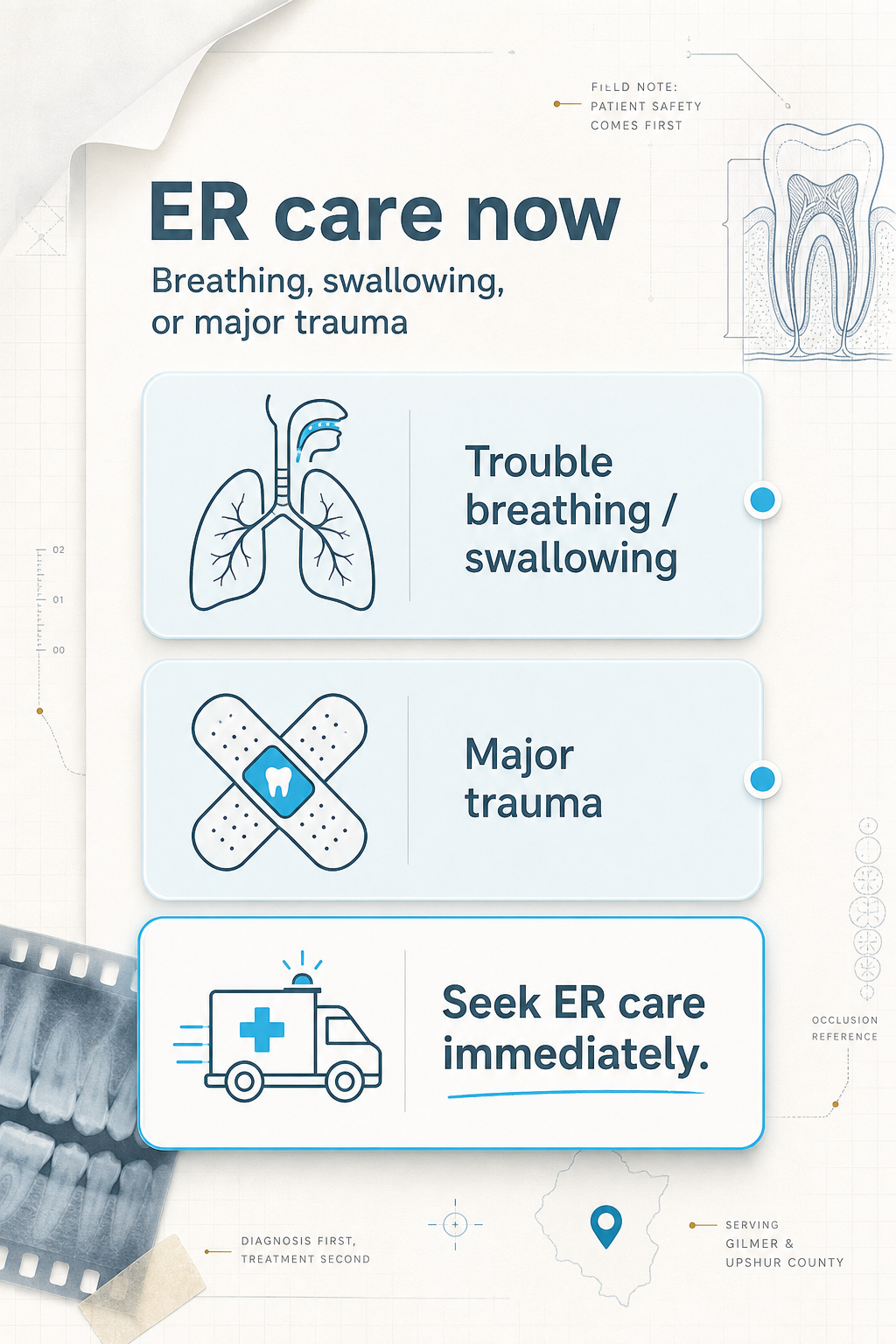
Seek emergency medical care right away if swelling is spreading, you have fever with facial swelling, you are having trouble breathing or swallowing, or the injury involves major trauma. Those symptoms may mean the problem is no longer only a dental-office issue.
That distinction matters. A dentist can treat many urgent tooth problems, but breathing trouble, swallowing trouble, spreading facial swelling, uncontrolled bleeding, or suspected jaw fracture should not be treated like a routine dental appointment.
What if a permanent tooth gets knocked out?
A knocked-out permanent tooth is time-sensitive. Pick it up by the crown, not the root. If it is dirty, rinse it gently with water. Do not scrub it, dry it, or wrap it in a tissue. If possible, place the tooth back in the socket. If that is not possible, keep it moist in milk, saliva, or a tooth-preservation kit and get dental care quickly.
For a child's baby tooth, do not try to force it back into the socket. Call a dentist for instructions.
The key point is moisture and speed. A permanent tooth has the best chance when it is handled carefully and evaluated quickly.
What if a tooth breaks or cracks?
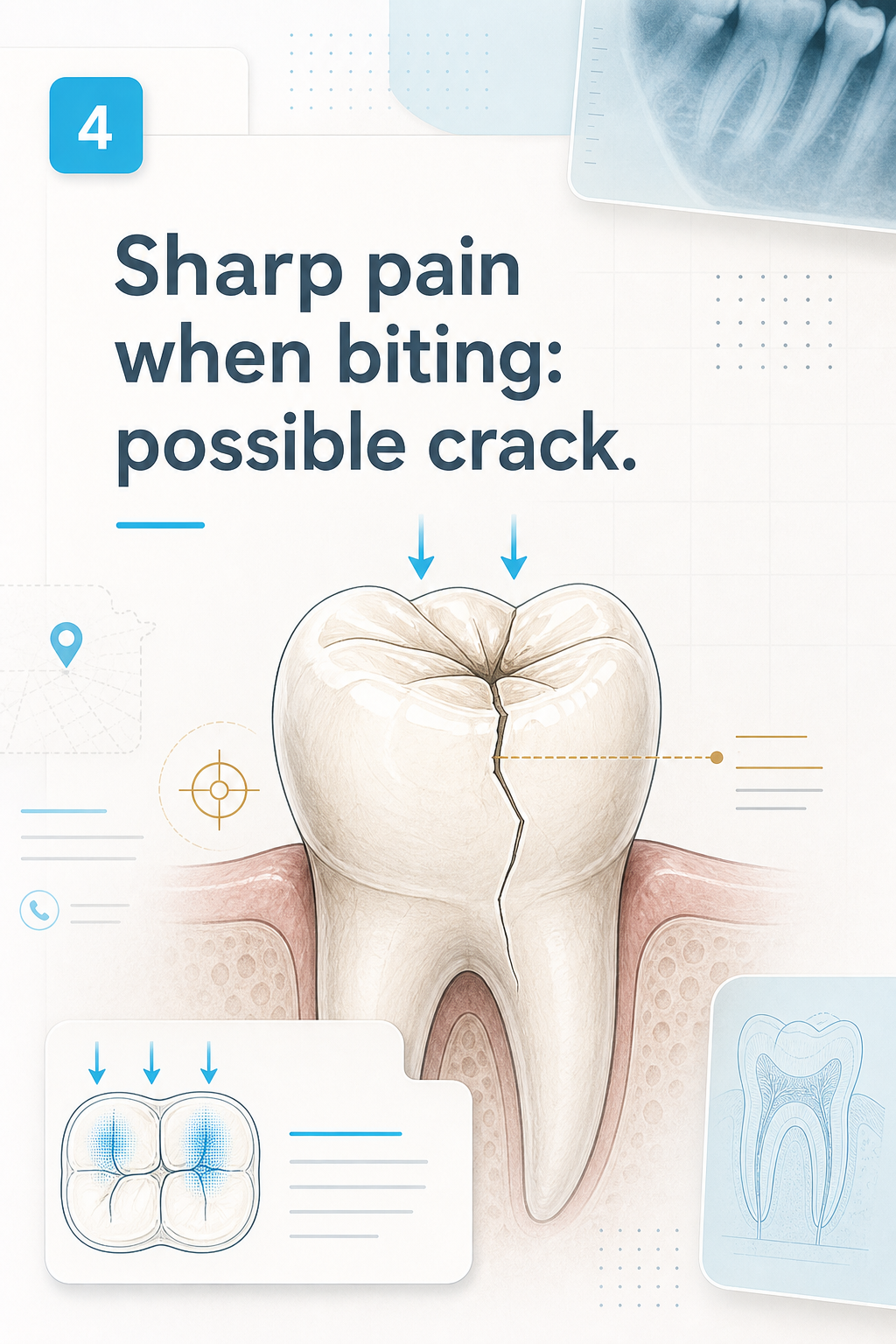
A broken or cracked tooth should be checked, especially if there is pain, a sharp edge, sensitivity, swelling, or a piece of tooth missing. Save any tooth pieces if you have them. Rinse gently, avoid chewing on that side, and use a cold compress if there is swelling.
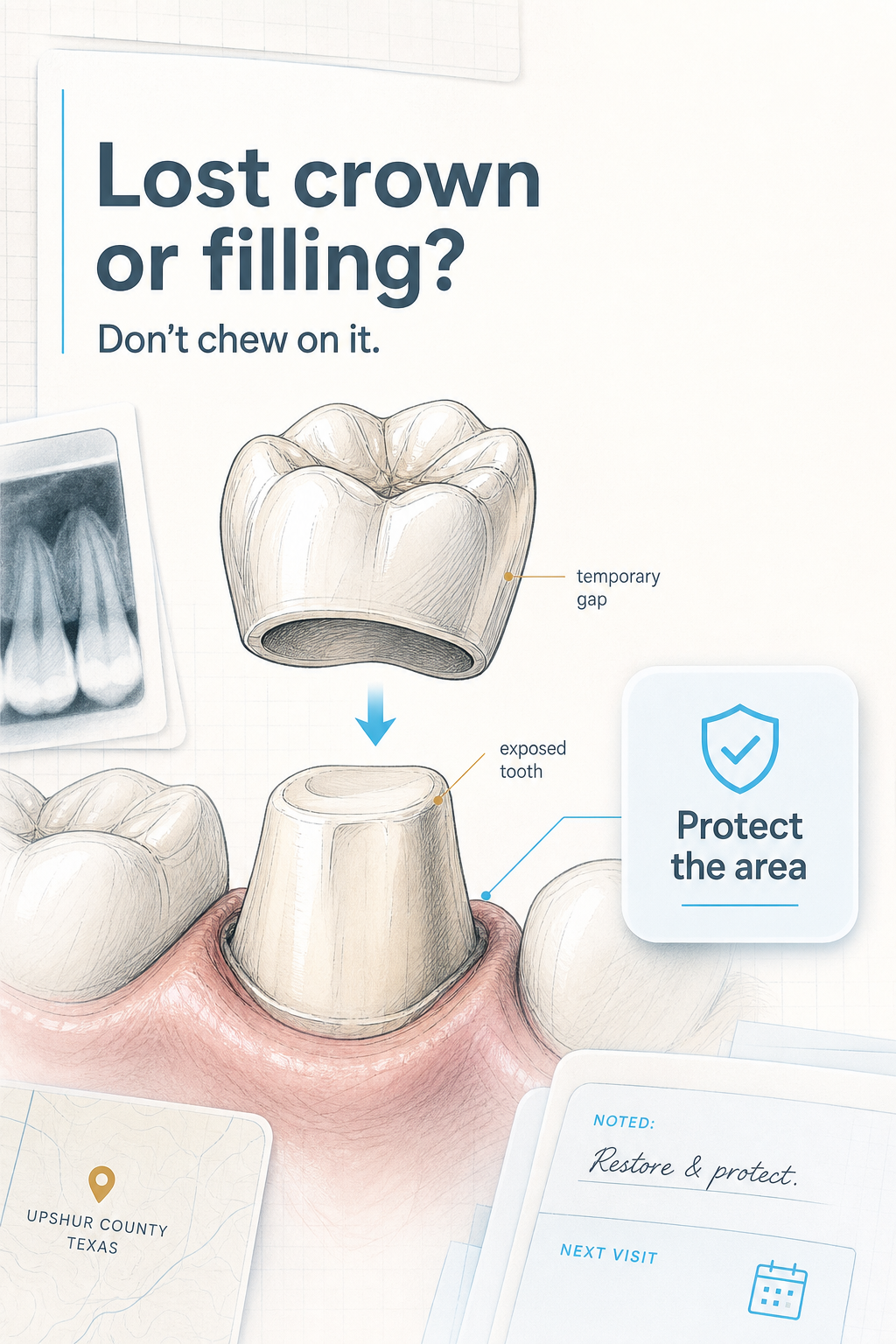
Treatment depends on how much tooth structure is involved. Some teeth can be repaired with bonding or a filling. Others need more protection. For certain cracked, worn, or damaged teeth, same-day crowns may be an option at Furniss Family Dentistry. That does not mean every broken tooth is a crown case. Dr. Furniss needs to examine the tooth first and decide what actually fits.
What if pain gets worse after an extraction?
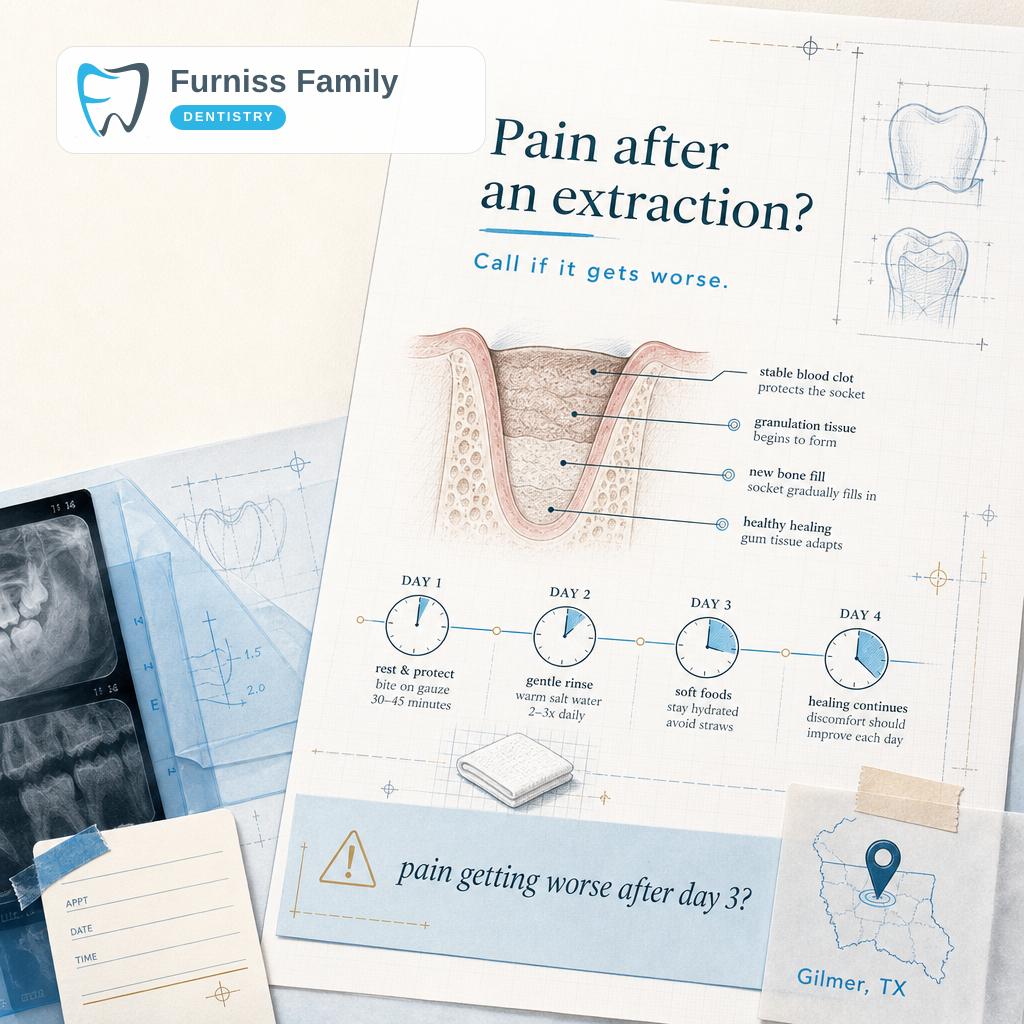
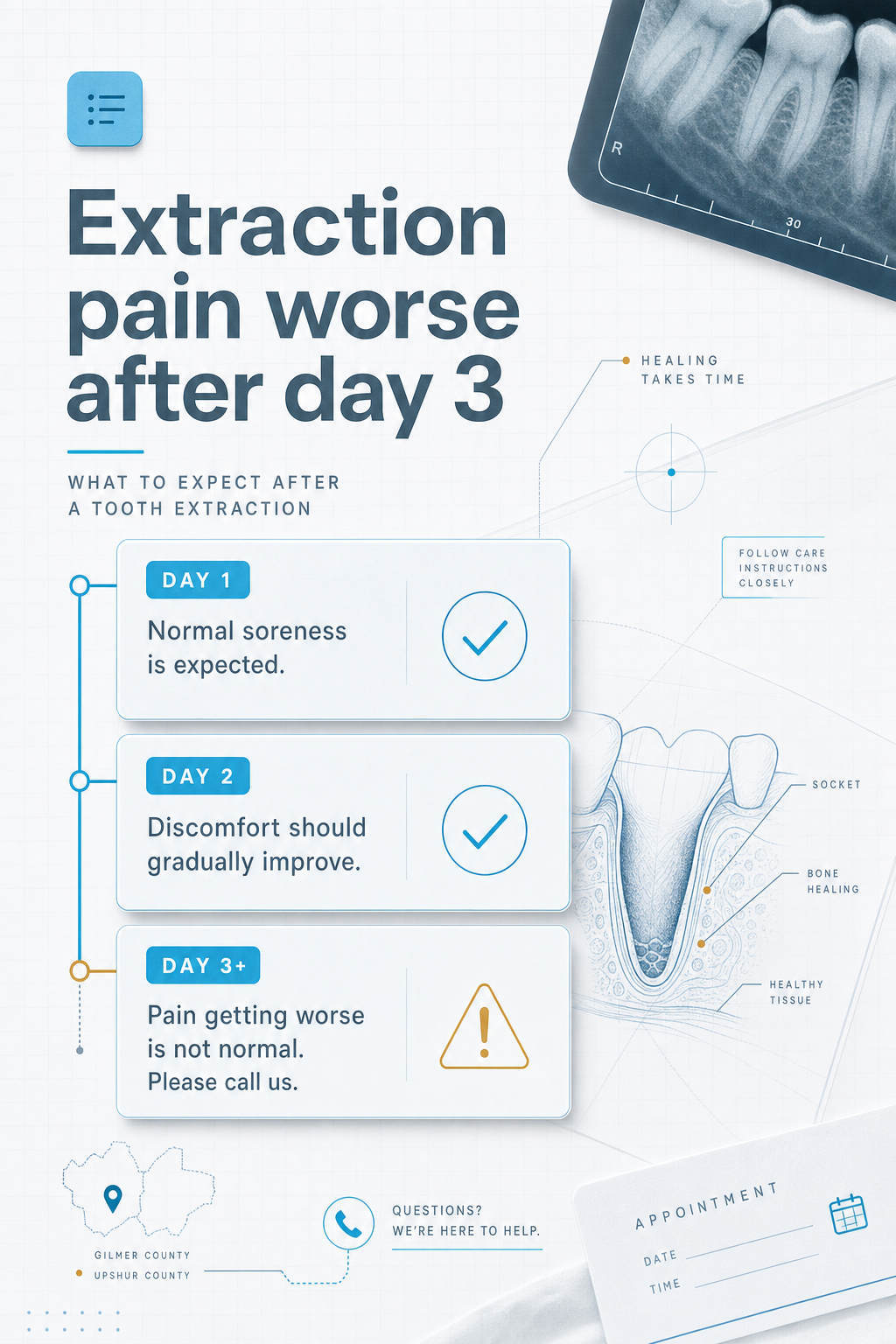
Pain after an extraction should usually begin trending better. If pain gets worse a few days later, especially with a bad taste, an empty-looking socket, or pain that radiates toward the ear, call the dental office and describe what is happening. It may be something like dry socket, and the right next step depends on an exam.
Can antibiotics fix a toothache?
Antibiotics are not a substitute for dental treatment. Some infections need drainage, root canal treatment, extraction, or another dental procedure to remove the source of the problem. A dentist can decide whether antibiotics are appropriate based on your symptoms, swelling, medical history, and exam.
This is one reason it is risky to ignore pain once swelling appears. Medication may help in certain situations, but if the source of the infection remains, the problem can come back or worsen.
Should I go to the ER or call a dentist?
For most toothaches, broken teeth, lost fillings, crown problems, and dental pain without serious medical symptoms, call a dentist first. Dental offices are set up to evaluate the tooth and talk through treatment options.
Use emergency medical care for trouble breathing or swallowing, facial swelling with fever, uncontrolled bleeding, suspected broken jaw, major trauma, or symptoms that feel life-threatening.
If you are not sure, call and describe the symptoms. The team can help you decide whether the next step is a dental visit, same-day guidance, or emergency medical care.
Emergency dental help in Gilmer, TX
If you are dealing with a toothache, broken tooth, swelling, or another urgent dental concern near Gilmer, call Furniss Family Dentistry at 903-843-1010. The practice is located at 1000 Titus St, Gilmer, TX 75644 and serves patients across Gilmer, Upshur County, and nearby East Texas communities.
You can also use the contact page if you are planning a non-urgent appointment, but urgent pain, swelling, or trauma is better handled by calling so the team can understand what is happening.
Quick questions
Is a toothache always an emergency?
Not always. Mild discomfort may be monitored briefly, but severe, persistent, worsening, or recurring tooth pain should be evaluated. Pain with swelling, fever, trauma, or trouble biting deserves faster attention.
Can I wait overnight with a toothache?
Sometimes, but not always. If pain is severe, swelling is present, a tooth was knocked out, there was trauma, or you have trouble breathing or swallowing, do not treat it like a normal next-week appointment.
What should I avoid during a dental emergency?
Do not put aspirin directly on the gums, do not use sharp tools in the mouth, do not ignore spreading swelling, and do not assume antibiotics alone will solve the problem.
Can a same-day crown help a broken tooth?
Sometimes. Same-day crowns can be helpful for certain cracked, worn, or damaged teeth, but not every broken tooth is a crown case. An exam is needed first.
Who should I call for urgent dental care near Gilmer?
For urgent tooth pain, broken teeth, swelling, or dental injury near Gilmer, call Furniss Family Dentistry at 903-843-1010 and describe what happened.
Get emergency dental help in Gilmer