
Dental Cleaning in Gilmer, TX: What Brushing Removes and What It Leaves Behind
Brushing removes soft plaque, but it cannot remove hardened tartar. Learn what happens during a professional dental cleaning in Gilmer, TX, how often to schedule one, and when buildup or bleeding deserves an exam.
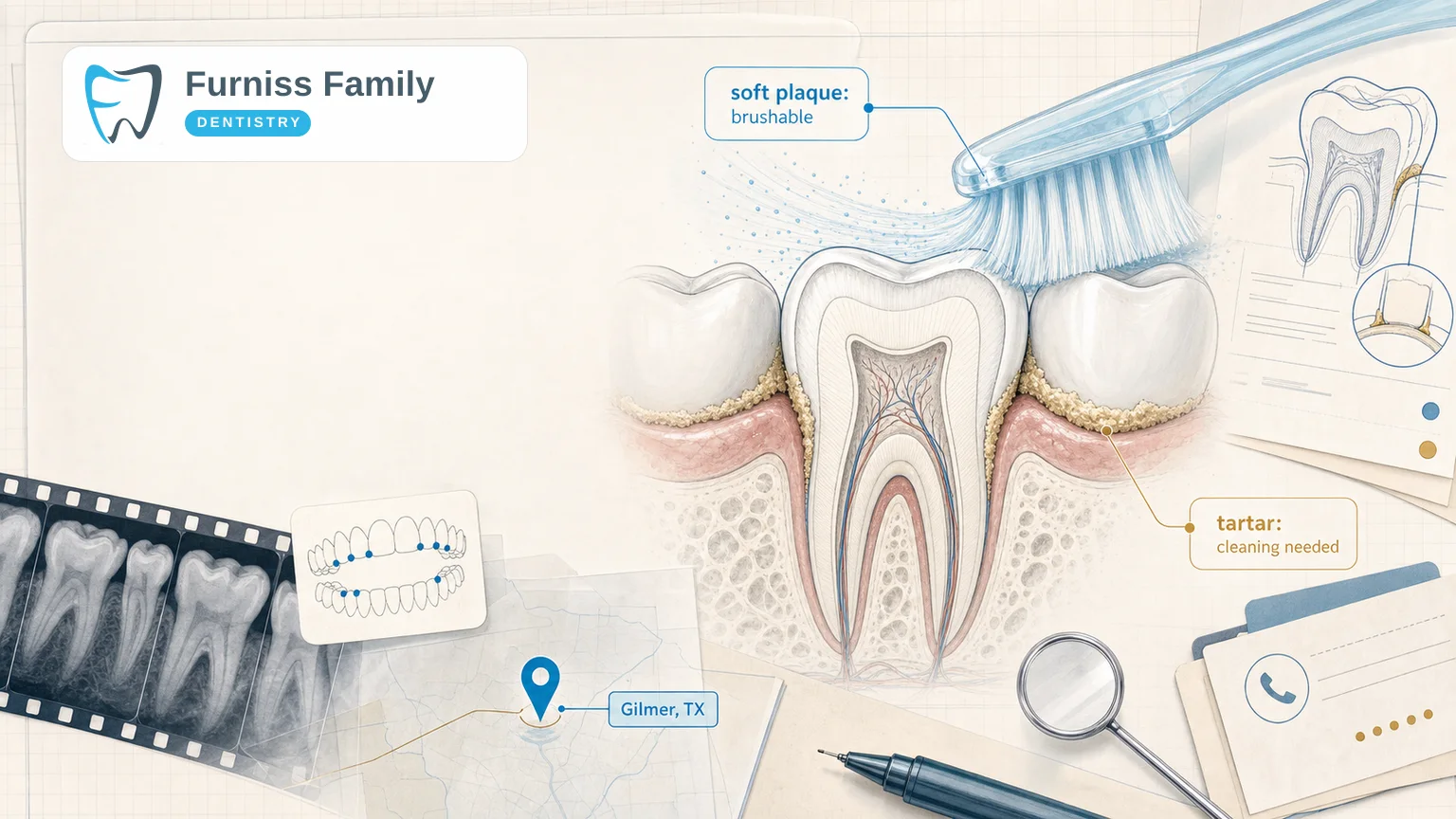
Brushing twice a day is essential, but it cannot remove everything from your teeth. A soft-bristled toothbrush and fluoride toothpaste can remove soft plaque from the surfaces you reach. Once plaque hardens into tartar, brushing harder will not scrub it away. Tartar needs to be removed during a professional dental cleaning.
That distinction matters because more pressure is not better cleaning. If you are brushing aggressively because your teeth still feel rough or “not clean enough,” the problem may be hardened buildup rather than effort.
What can brushing remove from your teeth?
Brushing helps remove plaque, food debris, and some surface stains from the outer, inner, and chewing surfaces of your teeth. Plaque is a soft, sticky film that continually forms in the mouth. Consistent brushing and daily cleaning between the teeth help disrupt it before it hardens.
The American Dental Association recommends brushing twice a day for two minutes with fluoride toothpaste and a soft-bristled toothbrush. Hold the brush at about a 45-degree angle to the gumline and use gentle, short strokes rather than forceful scrubbing.
Good home care lowers the amount of plaque that remains on your teeth, but even careful brushing has limits. Toothbrush bristles cannot reliably clean every tight contact, irregular surface, restoration margin, or area below the gumline.
What can’t brushing remove?
Brushing cannot remove tartar, also called calculus. Tartar forms when plaque remains long enough to absorb minerals and harden onto a tooth. It may feel rough and can appear yellow, tan, or darker near the gumline.
Once tartar is attached to the tooth, pressing harder with a toothbrush does not help. It can irritate the gums and may contribute to wear near the gumline without removing the deposit. A dentist or dental hygienist uses professional instruments to remove tartar safely.
Brushing also cannot diagnose cavities, gum disease, cracked teeth, failing restorations, or changes below the surface. That is why home care and professional dental visits work together rather than replacing one another.
Plaque vs. tartar: what is the difference?
| Plaque | Tartar | |
|---|---|---|
| What it is | A soft bacterial film that forms every day | Plaque that has hardened onto the tooth |
| How it feels | Often sticky or fuzzy | Usually hard and rough |
| What removes it | Brushing and cleaning between teeth | Professional dental instruments |
| Why it matters | Can contribute to cavities and gum inflammation | Creates a rough surface that holds more plaque near the gums |
The practical rule is simple: remove plaque consistently at home, and let a dental professional remove buildup that has hardened.
Do I still need a dental cleaning if I brush and floss well?
Yes. Strong home care can reduce plaque and tartar buildup, but it does not eliminate the need for professional evaluation and cleaning. A dental visit allows the team to reach areas you may miss and look for changes that are difficult to see or feel at home.
A routine cleaning also gives your hygienist or dentist a chance to check your technique. Small changes—using a softer brush, relaxing your grip, spending more time on the back teeth, or cleaning between teeth more consistently—can make daily care more effective.
The goal is not to replace your toothbrush with office visits or replace dental visits with brushing. The two parts support each other.
What happens during a professional dental cleaning?
The exact visit depends on your health and when you were last seen, but a routine appointment commonly includes:
1. A review of your health and concerns. Tell the team about sensitivity, bleeding, pain, medications, or changes you have noticed.
2. An examination of your teeth and gums. The dentist and hygienist look for plaque, tartar, cavities, gum inflammation, recession, damaged restorations, and other concerns.
3. Removal of plaque and tartar. Professional instruments are used to clean buildup from tooth surfaces and along the gumline.
4. Polishing. Polishing can remove remaining soft deposits and some surface stains.
5. Personalized home-care guidance. The team may recommend changes based on your brushing, gum health, dental work, or risk factors.
X-rays, fluoride treatment, or other services may be recommended based on age, symptoms, history, and clinical need. A routine cleaning is different from scaling and root planing, sometimes called a deep cleaning, which is used to treat gum disease below the gumline.
Learn more about family and preventive dentistry in Gilmer.
How often should you get your teeth cleaned?
There is no single interval that is right for every patient. Many people are seen about every six months, while someone with gum disease, frequent cavities, extensive dental work, dry mouth, tobacco use, or other risk factors may need a different schedule.
Your dentist should recommend an interval based on your current oral health rather than a one-size-fits-all calendar. If it has been a long time since your last cleaning, do not wait until you know the “perfect” timing. Schedule an exam and let the team help you restart from where you are.
What are signs you may be due for a dental cleaning?
Consider scheduling a visit if you notice:
- Hard or rough buildup near the gumline
- Gums that bleed repeatedly when you brush or clean between teeth
- Persistent bad breath that does not improve with normal home care
- Tender, swollen, or receding gums
- Teeth that continue to feel fuzzy or rough after brushing
- New sensitivity near the gumline
- A toothbrush that becomes splayed unusually quickly because you are pressing harder for a clean feeling
- It has been longer than the interval your dentist recommended
These signs do not prove that you only need a routine cleaning. Bleeding, sensitivity, recession, and pain can have several causes. An exam is the right way to determine whether the issue is plaque buildup, gum disease, a damaged tooth, or something else.
If bleeding or gum changes persist, read about gum disease treatment in Gilmer.
Can brushing harder replace a dental cleaning?
No. Brushing harder does not remove tartar and does not make fluoride work better. Heavy pressure may bend the bristles away from the areas they should clean and can irritate gum tissue.
Use only enough pressure to keep the bristles in light contact with the teeth and gumline. If the bristles flatten dramatically while you brush, relax your hand. Think of guiding the brush instead of scrubbing a pan.
Replace your toothbrush or brush head every three to four months, or sooner if the bristles are visibly frayed. If a new brush becomes splayed within a few weeks, ask your dentist or hygienist to check your pressure and technique.
Does a dental cleaning hurt?
A routine cleaning should generally be manageable, but some areas may feel sensitive—especially if there is inflamed gum tissue, exposed roots, or heavy buildup. Tell your hygienist if you are uncomfortable or anxious. The team can explain what they are doing, adjust the approach, and discuss ways to make the visit easier.
Avoiding care because you are nervous can allow a small problem to become more complicated. Furniss Family Dentistry welcomes patients who have been away from the dentist and focuses on practical next steps rather than judgment.
Schedule a dental cleaning in Gilmer, TX
Your teeth are not a dirty skillet, and your toothbrush is not a grill brush. Gentle daily cleaning removes plaque; professional care removes the hardened buildup your toothbrush cannot.
If you are due for a cleaning, have noticed bleeding or rough buildup, or want help improving your technique, contact Furniss Family Dentistry or call 903-843-1010. The office is located at 1000 Titus Street in Gilmer and serves patients throughout Upshur County and East Texas.
This article provides general education and is not a diagnosis. Recommendations depend on your dental health and treatment history.
Quick questions about dental cleanings
Can I remove tartar at home?
No. Once plaque hardens into tartar, normal brushing and flossing cannot safely remove it. A dentist or dental hygienist uses professional instruments to remove the deposit.
How long does a dental cleaning take?
The length varies based on your oral health, amount of buildup, and whether an exam, X-rays, or other services are needed. The office can give you a better expectation when scheduling.
Is a dental cleaning the same as a deep cleaning?
No. A routine cleaning focuses on preventive care around the teeth and gumline. Scaling and root planing treats gum disease by cleaning deeper below the gumline and may require more than one visit.
Should I stop brushing if my gums bleed?
Do not stop cleaning the area. Continue gently with a soft-bristled brush and arrange an exam if bleeding persists, is frequent, or comes with swelling, recession, tenderness, or bad breath.
Is Furniss Family Dentistry accepting new cleaning patients?
Call 903-843-1010 to ask about current appointment availability. Furniss Family Dentistry provides family and preventive dental care in Gilmer for patients from across East Texas.
Sources
- American Dental Association: Toothbrushes
- MouthHealthy from the ADA: Brushing Your Teeth
- MouthHealthy from the ADA: Plaque
- MouthHealthy from the ADA: Scaling and Root Planing
Explore family dentistry in Gilmer